
Why Susan Collins Will Lose Her Senate Seat In 2026: Key Factors
Why The Race Looks Worse For Collins Than It Did In 2020, Maine's Blue Lean And The Decline Of Ticket-Splitting, Abortion, Kavanaugh, And The End Of Her Moderate Shield, Medicaid, Budget Fights

Why Susan Collins Will Lose Her Senate Seat In 2026: Key Factors
If you’re watching the 2026 midterms, you’ve probably noticed Senator Susan Collins is in more trouble than ever before. The numbers don’t look good for her: prediction markets are giving Democrats a 73 to 76 percent chance of flipping her seat, polls keep showing her behind, and her favorability ratings in Maine have absolutely tanked. This isn’t just the usual midterm chatter that fades away. The underlying dynamics have shifted in ways that really matter.
The main reason Susan Collins is likely to lose in 2026 isn’t just about one bad poll—it’s the combination of Maine’s steady move toward Democrats, the collapse of her moderate reputation after the Kavanaugh and Dobbs decisions, Medicaid politics that undercut her old strengths, and a Democratic field that’s way more organized and unified than in 2020. Collins has handled tough situations before, but this is a different beast. All these problems together? It’s hard to see how seniority and a bipartisan image can bail her out this time.
Maine’s voters aren’t the same as they were. The political landscape has changed. And the arguments Collins used to win five times just aren’t landing like they used to. Here’s a closer look at why the usual “never count Collins out” logic might finally fail her.
Key Takeaways
Collins trails her likely Democratic opponent by six to nine points in multiple polls—a much worse deficit than she saw at this point in 2020.
The post-Dobbs climate and her Kavanaugh vote have really damaged her moderate image with independents and women, both groups she desperately needs.
Maine’s shrinking ticket-splitting electorate and the Democrats’ early unity have erased two of the advantages that helped Collins survive in past races.
Why The Race Looks Worse For Collins Than It Did In 2020
Collins’ supporters always point out that she trailed in 2020 polls and still won by nine points. Sure, that happened. But 2026 is a whole different animal.
Back in 2020, Collins ran against Sara Gideon, who had plenty of money but came off as a pretty generic Democrat, during a presidential election that scrambled normal voting patterns. Collins survived because a ton of Mainers split their tickets—voting for Joe Biden and then for Collins. That crossover support basically saved her.
This time, the numbers just don’t break her way. The latest Maine People’s Resource Center poll found Democratic challenger Graham Platner leading Collins 48 percent to 39 percent among 1,168 likely voters. Emerson College also showed her down, 48 to 41. Worst of all, Collins now faces a 30-point net unfavorable rating among independents—the very people who rescued her in 2020.
The 2020 comparison doesn’t really hold up when you look deeper. Kamala Harris carried Maine statewide, pushing the state even bluer at the presidential level. The moderate Republican brand that let Collins stand apart from her party just doesn’t have the same room to breathe when voters are lining up by party more than ever.
Of course, nothing’s guaranteed. But the old “she always beats the polls” argument depends on a big, persuadable middle that’s just not there anymore.
Maine’s Blue Lean And The Decline Of Ticket-Splitting

You can’t really get why Collins is in trouble without seeing how much Maine has changed. The state’s been drifting left for years, and the ticket-splitting that used to help Collins is fading fast.
Maine went for the Democrat in the 2020 and 2024 presidential races. Governor Janet Mills won two terms, and Democrats have tightened their grip on the state legislature. The idea that Maine is still “purple,” where a moderate Republican can keep outperforming her party, feels more like nostalgia than reality now.
Ticket-splitting is the key. As analysts have pointed out, fewer voters are willing to split their votes between parties, and Maine’s no exception. In 2020, Collins probably squeezed out the last big crossover win in the state. That window’s closing.
Democrats have also gotten more organized and are pouring resources into local races. The party’s base in southern Maine—especially Portland and the suburbs—has become solidly progressive, while rural northern Maine, where Collins used to do well, hasn’t grown enough to make up the difference.
That doesn’t mean every Republican is doomed here. But Collins now has almost zero room for mistakes, and she’s not used to that kind of pressure.
Abortion, Kavanaugh, And The End Of Her Moderate Shield
Nothing’s hurt Susan Collins’ moderate image more than abortion—and her 2018 vote to confirm Brett Kavanaugh to the Supreme Court just won’t stop haunting her.
She insisted back then that Kavanaugh would respect Roe v. Wade as settled law. But in 2022, he joined the majority in Dobbs v. Jackson Women’s Health Organization, overturning the constitutional right to abortion. Collins called the decision “ill-considered,” but the political damage was already done.
This issue cuts right to the heart of her political identity. For years, she sold herself as a pro-choice Republican who’d protect reproductive rights. The Kavanaugh-Dobbs combo shattered that trust for a lot of Mainers, especially women and independents who used to give her the benefit of the doubt.
Democrats have zeroed in on this. Planned Parenthood endorsed Graham Platner. New ads highlight that Collins doesn’t “regret” voting for Kavanaugh, which is just handing them ammo.
Collins has tried to distance herself from the Dobbs outcome, but as NBC News reports, Maine Democrats aren’t letting her off the hook. In a post-Dobbs world—where Kamala Harris carried Maine partly because of abortion rights—the moderate shield Collins used to count on is cracked, and honestly, it’s hard to see her fixing it in time.
Medicaid, Budget Fights, And The Limits Of Appropriations Power
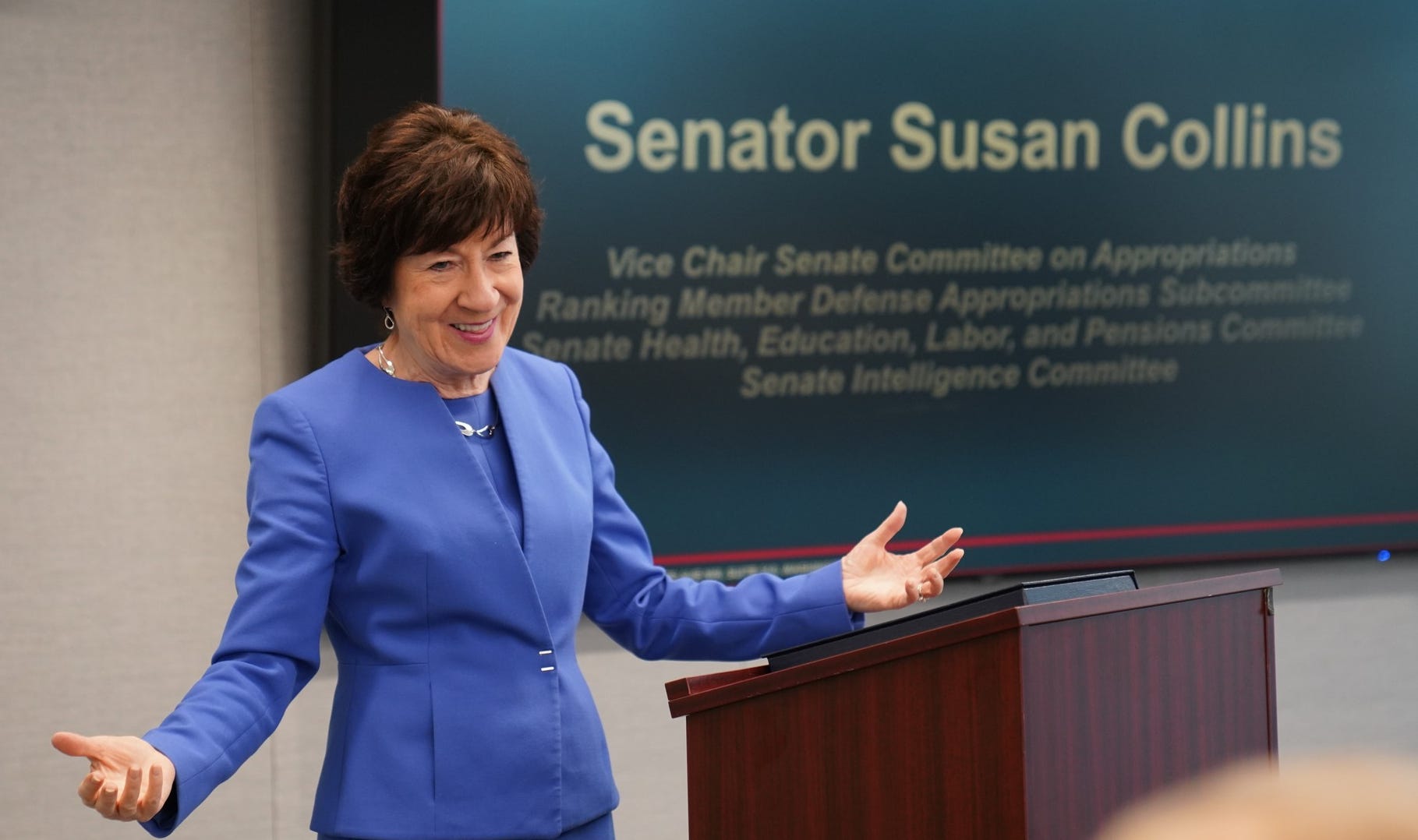
If you thought Collins’ chairmanship of the Appropriations Committee would protect her, the Medicaid fight says otherwise.
She voted to advance the GOP budget resolution that set up massive Medicaid cuts, then said she was “concerned” about how deep they were. That move—voting yes, then expressing worry—just fuels the impression that she only breaks with her party when it’s safe.
The stakes are real for Maine. A RAND analysis says the law’s Medicaid provisions will cut state funding by hundreds of billions nationally, and states like Maine will feel the squeeze. Governor Janet Mills has been vocal about what that means for Maine’s healthcare, and that criticism is landing right on Collins.
Her appropriations gavel, once her ace card, is a double-edged sword now. She’s brought federal dollars home, sure, but a standoff with Democratic Vice Chair Patty Murray over spending priorities has stalled bipartisan deals and chipped away at her dealmaker image. Senate GOP leaders are pushing her toward Trump’s budget, making it tough for her to look independent.
For Mainers who rely on Medicaid, the math is simple: Collins could’ve blocked these cuts and didn’t. Her committee spot might bring in projects, but if CNBC’s reporting is right, voters are putting healthcare security ahead of earmarks this time around.
A Weaker Democratic Field Still May Be Good Enough
You might think Collins’ best hope is facing a weak Democrat. The 2026 field isn’t the all-star lineup some national Democrats hoped for, but honestly, it might not have to be.
Graham Platner, an oyster farmer and total political outsider, crushed Governor Janet Mills in the June 9 Democratic primary by 33 points, uniting the party much faster than anyone saw coming. Platner’s working-class, baggage-free profile has actually worked better against Collins than the polished, establishment types Democrats have tried before. Sometimes, voters just want something different, right?
The rest of the field tells you a lot about how things shook out. Shenna Bellows, Troy Jackson, and Nirav Shah all had statewide profiles but chose not to run. Dan Kleban, Jordan Wood, and David Costello jumped in, fizzled out, and left. Platner ended up with a pretty clear path, sidestepping the kind of messy primary that hurt Sara Gideon’s campaign in 2020.
Platner’s case against Collins is blunt and honestly hard to argue with: “When she breaks with her party, it’s almost always on votes that are gonna pass anyway.” That line seems to hit home with weary independents in a way the policy-heavy stuff from previous challengers never did.
The race hit a bump when a sexting controversy involving Platner briefly pulled the polls into a dead heat. Republicans dumped in $3 million right after, clearly seeing an opening. Whether that scandal actually changes the race or just fades away—well, we’ll see what the next few weeks of polling say.
National Money, Party Strategy, And The Path To A Democratic Flip

If you want to know how seriously both parties are taking this race, just look at the money pouring in.
The Senate Leadership Fund, which is the main Republican super PAC, threw $42 million behind Collins—an eye-popping sum for Maine. Pine Tree Results PAC set aside another $23.8 million for ads. Collins also pulled in huge checks from billionaire donors, giving her a war chest most incumbents can only dream about.
Democrats aren’t sitting out. The Democratic Senatorial Campaign Committee marked Maine as a top target. For Maine Democrats and their national backers, the math’s pretty rough: if they don’t flip Collins’ seat, they’d need to win three other Republican-held seats for a majority. That’s a tall order. So, national Democratic money keeps flooding into Maine.
The state party learned some lessons from 2020. Instead of betting everything on one big-name candidate, they built up organizing muscle all over Maine, especially in the swingy central districts where Collins usually does well.
Honestly, the strategy seems obvious. Republicans are spending like they’re worried, not confident. Democrats see Maine as a must-win. The RealClearPolitics average has Collins down by 6.3 points. Both Cook Political Report and Sabato’s Crystal Ball call it a Toss-up, but all the spending and poll movement? It’s clear: Collins hasn’t been in this kind of trouble this late in a race before.
Frequently Asked Questions
Is Susan Collins running for reelection in 2026?
Yes. Senator Susan Collins is going for a sixth term in the November 3, 2026 election. She decided to run again after weighing retirement, pointing to her role as Senate Appropriations chair as a reason to stick around.
Who are the leading candidates challenging Susan Collins in the 2026 Maine Senate race?
The Democratic nominee is Graham Platner, an oyster farmer and political outsider who won the June 9 primary by 33 points over Governor Janet Mills. Other Democrats—Shenna Bellows, Troy Jackson, Nirav Shah, Dan Kleban, Jordan Wood, and David Costello—either passed on running or just didn’t catch on.
What do the latest 2026 polls show for Susan Collins versus her top opponent?
Several polls now have Collins trailing Platner. The Maine People’s Resource Center put Platner ahead 48 to 39 percent, and Emerson College showed a 48 to 41 percent lead for Platner. RealClearPolitics averages Collins down about 6.3 points, though things tightened up briefly after Platner’s controversy in early June.
How has Susan Collins’ approval rating changed heading into the 2026 election?
Collins’ approval rating has dropped to record lows, according to Morning Consult’s tracking. Her standing with independents tanked, too—Emerson shows a 30-point net unfavorable rating there, which is a huge swing from the crossover support she had in 2020.
What were Susan Collins’ vote totals and margins in her previous Senate elections?
Collins beat Sara Gideon by about nine points in 2020, way outperforming the polls. In 2014, she won by roughly 37 points—just a blowout. Her 2008 margin was about the same. This 2026 cycle is the first time she’s consistently trailed a named opponent at this point in the race.
Which issues are most likely to influence Maine voters in the 2026 Senate race?
Abortion and Medicaid really stand out this time around. When Collins voted in 2018 to confirm Brett Kavanaugh, then the Dobbs decision overturned Roe v. Wade, Democrats jumped on it as a major line of attack. And those federal Medicaid cuts—done through reconciliation—are hitting Maine hard, which makes Collins’ usual claims about protecting the state’s interests with her appropriations power seem... well, a bit shaky this year.
#MainePolitics #SusanCollins #USSenate #2026Elections #MaineElections #PoliticalNews