
The Federalization of Mail-In Voting: Trump’s Executive Order and the Battle at the Supreme Court
What Is in the Executive Order?, A Brief History: Over 160 Years of Mail-In Voting, Strategic Goals: Why Push This Executive Order Now?, What Are the “Big Thinkers” and Regular Voters Saying?

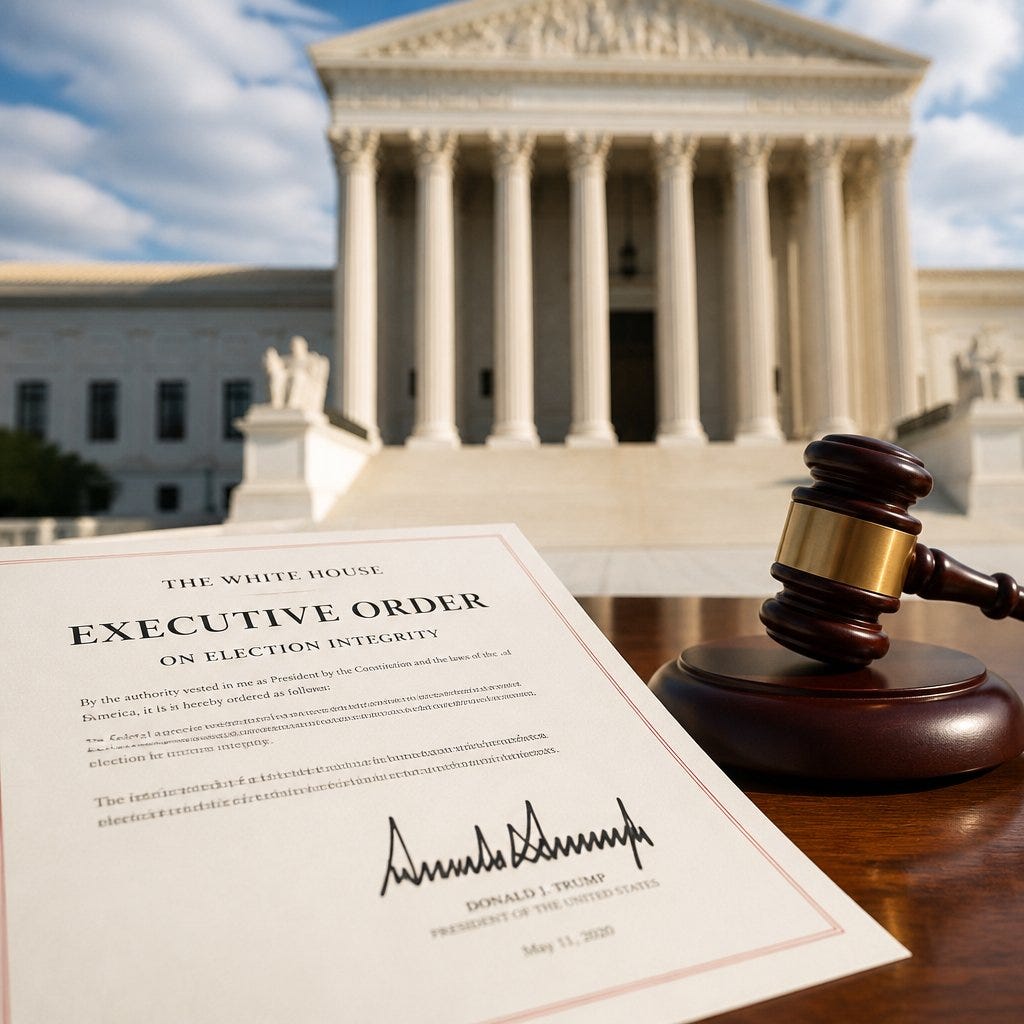
A major constitutional battle over the mechanics of American elections is reaching a climax ahead of the 2026 midterm elections. The Trump administration has petitioned the U.S. Supreme Court for an emergency stay that would allow President Donald Trump’s March 2026 Executive Order—titled “Ensuring Citizenship Verification and Integrity in Federal Elections”—to take effect while lower-court challenges proceed.
The executive order proposes a sweeping overhaul of how mail-in and absentee ballots are issued, processed, and tracked across the nation. In response, Democratic attorneys general representing 23 states and the District of Columbia filed suit in federal court, arguing that the President lacks the constitutional authority to dictate state election administration unilaterally.
What Is in the Executive Order?
The executive order aims to change key parts of how elections are run at both the state and federal level by directing executive branch agencies. Its main requirements include:
Federal Citizenship Lists: The Department of Homeland Security (DHS), United States Citizenship and Immigration Services (USCIS), and the Social Security Administration (SSA) are directed to compile state-by-state lists of verified U.S. citizens eligible to vote.
Postal Service Enforcement: The U.S. Postal Service (USPS) is ordered to initiate rulemaking restricting the delivery of outbound mail-in and absentee ballots exclusively to individuals included on pre-approved state-submitted lists, transmitted to USPS at least 60 days before an election.
Barcoded & Secure Envelopes: All mail-in ballot envelopes must have standard “Official Election Mail” markings and unique barcodes so every ballot can be tracked as it moves through the mail.
Prosecutorial & Financial Pressure: The Department of Justice (DOJ) is directed to prioritize criminal investigations into election officials who issue ballots to individuals deemed “ineligible” by federal standards, and the executive branch threatens to withhold federal funds from noncompliant states. This dual threat significantly amplifies the order’s impact by leveraging both legal risk and vital funding, putting intense pressure on state and local election officials to comply—even if doing so conflicts with state law or longstanding practices.
A federal judge in Massachusetts issued a preliminary injunction blocking the order for the 23 plaintiff states and D.C., a decision recently upheld by a panel of the 1st U.S. Circuit Court of Appeals. The administration’s emergency application now asks the Supreme Court to lift that injunction nationwide before voters head to the polls.
A Brief History: Over 160 Years of Mail-In Voting
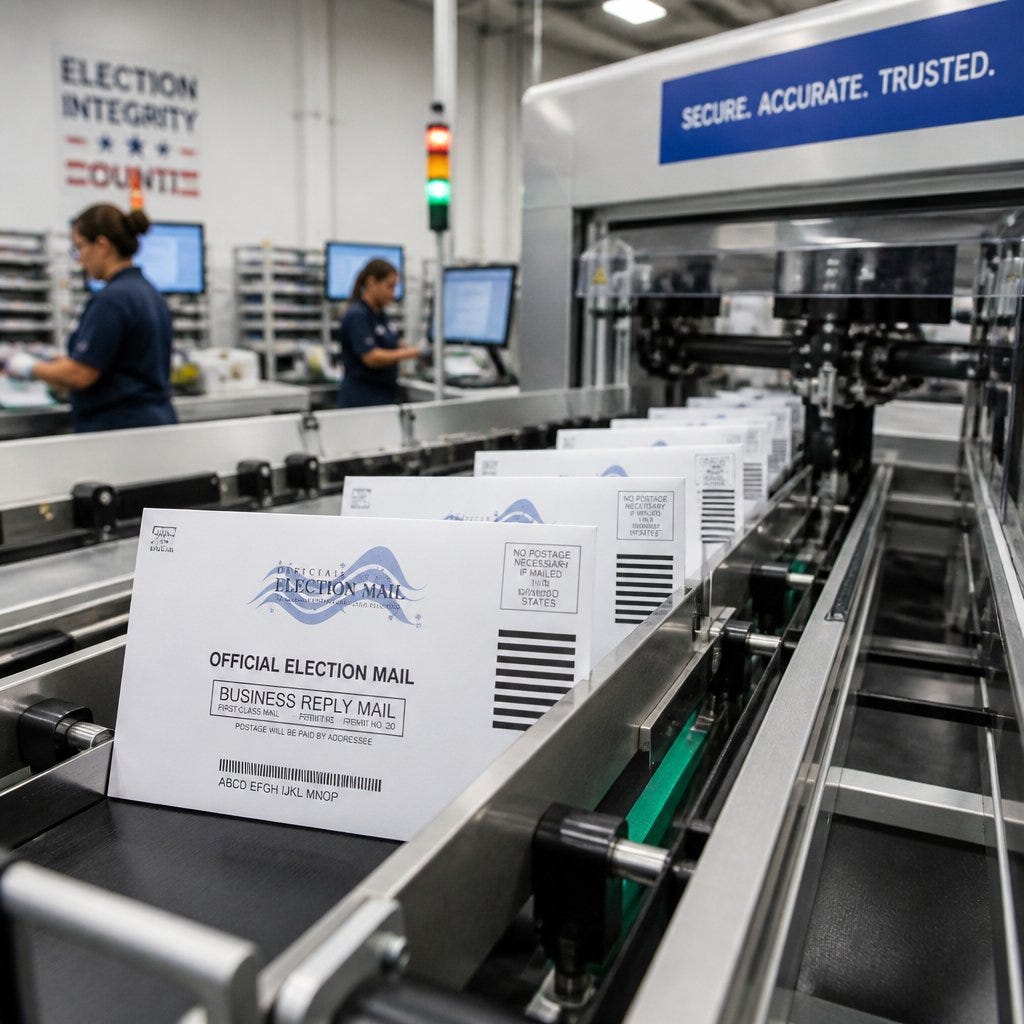
To understand the friction surrounding this directive, it helps to review the history of remote voting in the United States.
States have used mail-in and absentee ballots for over 160 years.
1864: Civil War Soldiers ──► 1978: No-Excuse Mail Voting ──► 1998: All-Mail ElectionsFirst mass absentee: California drops reason Oregon adopts full. Voting for Union troops requirement for absentee vote-by-mail system
Civil War Roots (1860s): Large-scale absentee voting was first introduced during the Civil War to allow Union soldiers to cast ballots from battlefields.
Expansion to Civilians (1900s–1970s): Over the decades, states expanded absentee access to travelers, sick individuals, and overseas workers.
No-Excuse & Universal Mail Voting (1978–Present): In 1978, California became the first state to allow “no-excuse” absentee voting. Oregon adopted the nation’s first universal, all-mail election system in 1998. By 2026, 37 states and D.C. offer no-excuse mail voting, with multiple states conducting elections entirely by mail.
Historically, vote-by-mail has operated smoothly across both Conservative and Progressive states—including Utah, Oregon, Washington, Colorado, and Florida—supported by robust verification systems like signature matching, secure drop boxes, and state-level barcoding.
Strategic Goals: Why Push This Executive Order Now?
Why is the Trump administration seeking to impose federal controls over a process traditionally managed at the county and state level? Political analysts and legal scholars point to four primary motivations:
1. Enforcing Federal Control Over Election Logistics
By leveraging the U.S. Postal Service and federal funding, the administration seeks to establish a precedent of federal oversight over election administration. Restricting USPS deliveries to federal pre-approved lists effectively creates a national gatekeeper for who can receive a mail ballot.
2. Amplifying the “Noncitizen Voting” Narrative
Although noncitizen voting in federal elections is illegal and extremely rare—as confirmed by state audits and independent studies—the order focuses a lot on checking citizenship using federal data. Framing the order this way ties it closely to debates about border security and protecting the vote.
3. Introducing Procedural Friction
Requiring state election offices to submit approved voter lists 60 days before an election clashes directly with state laws that allow voters to register or request absentee ballots closer to Election Day. This 60-day cutoff could inadvertently disenfranchise voters who move, register late, or change their name, naturally depressing total mail ballot volume.
4. Testing Presidential Authority (Elections Clause)
The order directly tests the constitutional boundary of the Elections Clause (Article I, Section 4), which assigns the “Times, Places and Manner” of holding congressional elections to state legislatures and Congress—not the President. Winning Supreme Court approval would expand the scope of executive authority over state-run institutions.
What Are the “Big Thinkers” and Regular Voters Saying?
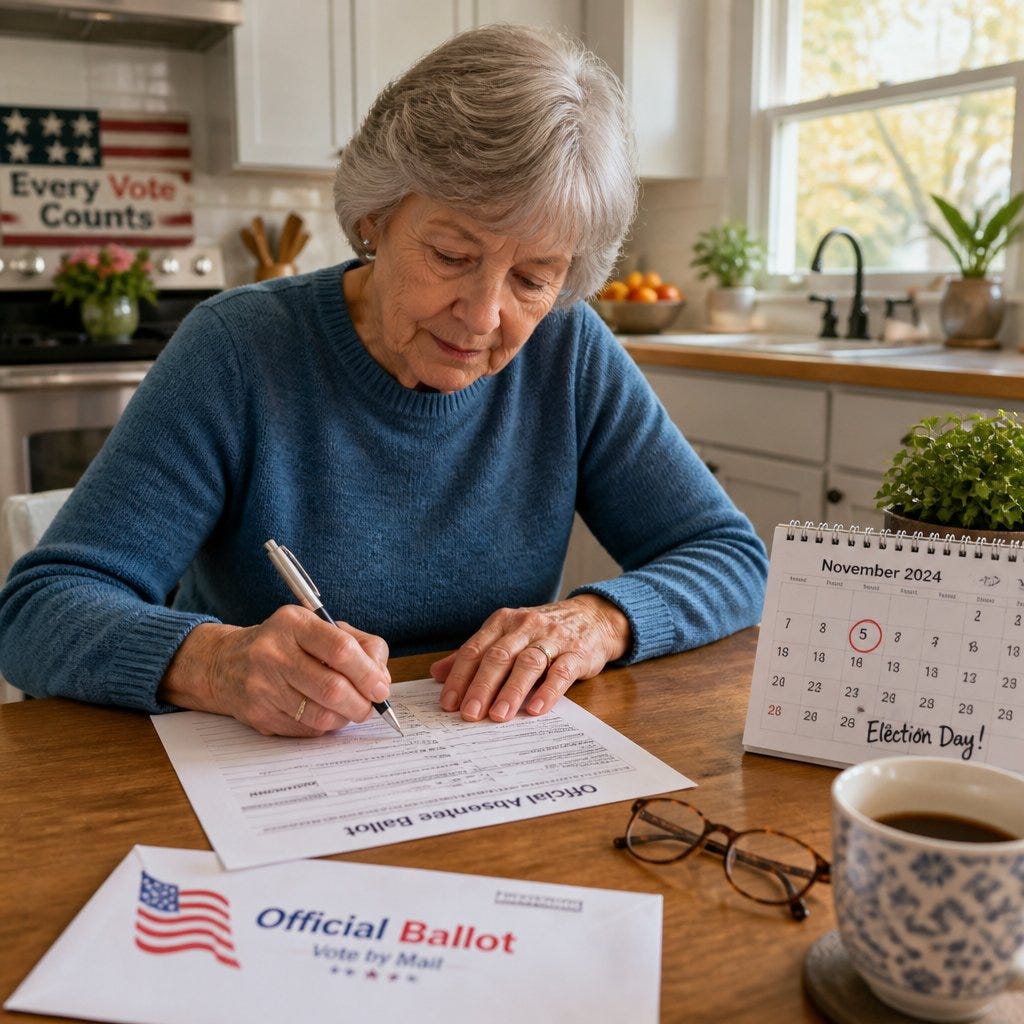
The debate has split legal experts, political commentators, election officials, and everyday voters along distinct constitutional and practical lines.
PERSPECTIVES AT A GLANCE
Period Milestone Historical Context & Impact, 1864 (Civil War) Union Soldiers Voting First mass absentee voting in U.S. history to allow soldiers on the battlefield to cast ballots.
1900s–1970s Civilian Expansion: States expand access to travelers, ill residents, and overseas civilian workers.
1978 No-Excuse Absentee: California becomes the first state to drop reason requirements for receiving an absentee ballot.
1998 Universal Vote-By-Mail: Oregon voters pass a ballot measure adopting the nation’s first full all-mail election system.
Present Era: Widespread Adoption. 37 states and D.C. offer no-excuse mail voting, operating smoothly across both Conservative and Progressive states.
Legal Scholars & Constitutional Experts
The Progressive & Institutionalist View: Some constitutional scholars say the executive order goes too far. They note that federal databases like the SSA and DHS’s SAVE system weren’t meant to be used as up-to-the-minute voter lists and often have mistakes about new citizens. They also warn that threatening state officials with prosecution for following their own state’s election laws could discourage people from working in elections.
The Conservative View: Supporters of the order believe the federal government needs to step in to help people trust elections again. They say making sure only U.S. citizens vote is important, and using standard barcodes from the Postal Service helps track every ballot and make the process more open.
Regular Voters Across the Spectrum
Mail-In Voters (Seniors, Rural, & Military): Mail voting is widely popular among older Americans (over 35% of voters aged 65+ vote by mail), military members deployed overseas, and rural residents far from polling stations. Many express concern that bureaucratic friction, database mismatches, or missed 60-day deadlines could invalidate their legitimate ballots.
Skeptics of Mail Voting: Voters who prefer in-person voting often welcome stricter rules, believing that centralizing control and requiring uniform barcoding will reduce perceived vulnerabilities and prevent potential fraud.
Conclusion
As the Supreme Court considers the administration’s emergency petition, the justices must weigh the constitutional balance between state-administered elections and federal executive authority. Whether the order is allowed to take effect before the midterms or remains blocked, the debate surrounding citizenship verification, postal regulation, and voter access will remain a central flashpoint in American politics.
#MailInVoting|#SupremeCourt|#ElectionLaw|#ExecutiveOrder|#VotingRights