
Cabinet Vacancy and Senate Confirmation Protection Act
It’s time to restore constitutional checks and balances. Our legislation mandates Senate approval for every presidential nominee—no shortcuts, no political maneuvering.

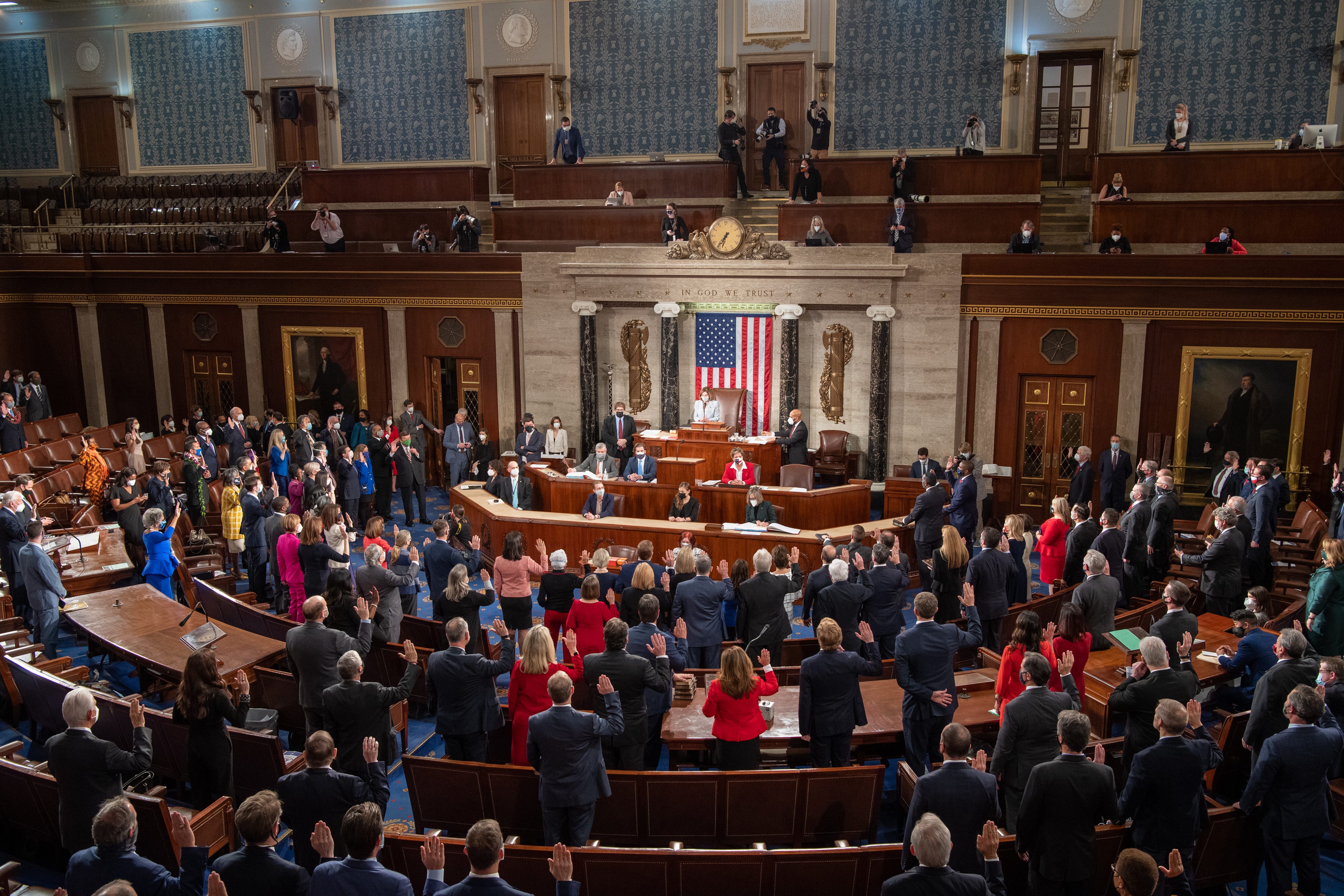
Do you know anyone from the US House of Representatives or Senate? Tell them about my proposed legislation, the Cabinet Vacancy and Senate Confirmation Protection Act, HR20260030CN.
Cabinet Vacancy and Senate Confirmation Protection Act
HR20260030CN
Purpose
The purpose of this Act is to preserve the Senate’s constitutional advice-and-consent authority and prevent prolonged, successive, or strategically manipulated acting appointments to the offices of executive department heads.
Article II, Section 2, Clause 2 of the Constitution provides that the President:
“He shall nominate, and by and with the Advice and Consent of the Senate, shall appoint…all other Officers of the United States.”
Although Congress has authorized qualified officials to temporarily perform the duties of vacant offices, such authority should not be used to circumvent the constitutional process for appointing permanent principal officers.
Section 1. Covered Offices
For purposes of this Act, the term “covered office” means the head of an executive department whose permanent appointment requires nomination by the President and confirmation by the Senate.
Section 2. Automatic Temporary Succession
When a vacancy occurs in a covered office because of death, resignation, removal, inability to serve, or another lawful cause, the Senate-confirmed deputy to that office shall automatically perform the functions and duties of the office temporarily in an acting capacity.
The deputy shall not become the permanent holder of the vacant office solely by reason of such temporary service.
If there is no Senate-confirmed deputy who is able and eligible to serve, the next Senate-confirmed officer identified in the department’s statutory order of succession shall perform the duties temporarily.
Section 3. Restriction on Presidential Designations
The President may not bypass the statutory successor by designating another officer, employee, private citizen, special government employee, or White House official to serve as acting head of a covered department.
The President may not remove or transfer an eligible statutory successor to install another person as acting head of the department.
Section 4. Submission of Nomination
The President shall submit a nomination for the vacant office to the Senate not later than 30 calendar days after the vacancy occurs.
Nothing in this Act shall restrict the President’s constitutional authority to select and nominate a qualified individual. Nothing in this Act shall require the Senate to approve a nominee.
Section 5. Limitation on Acting Service
An eligible statutory successor may serve as acting head for no more than 90 calendar days after the vacancy occurs.
The acting-service period shall apply to the office and shall not restart because one acting official is removed, replaced, transferred, or succeeded by another person.
Congress may provide a limited extension when a nomination is pending before the Senate, but no extension shall permit indefinite acting service.
Section 6. Rejected, Withdrawn, or Returned Nominations
If a nomination is rejected by the Senate, withdrawn by the President, or returned to the President, the President shall submit a new nomination within 30 calendar days.
The President may not appoint the rejected or withdrawn nominee as acting head of the same department unless the Senate subsequently confirms that individual.
Section 7. Prohibition on Circumvention
The President and the head of an executive department may not circumvent this Act by:
Repeatedly designating different acting officials;
Delegating all the secretary’s authority substantially to an individual who is not lawfully serving as acting secretary;
Changing an official’s title while allowing that official to exercise the powers of the vacant office;
Removing a statutory successor for the purpose of avoiding the succession requirements; or
Relying on a department-specific succession order that conflicts with this Act.
Section 8. Legal Effect of Violations
Any nondelegable function or duty of a covered office performed by a person serving in violation of this Act shall have no force or effect.
Another officer may not subsequently ratify an action rendered invalid under this section.
A person directly affected by an action taken in violation of this Act may seek declaratory or injunctive relief in a federal court of competent jurisdiction.
Section 9. Reporting Requirements
Immediately after a vacancy occurs, the department shall report to Congress and the Comptroller General:
The date and cause of the vacancy;
The name and current office of the person temporarily performing the duties;
The statutory authority for that person’s service;
The date the temporary service began;
The date on which the temporary authority will expire; and
The status of any nomination submitted to the Senate.
The information required under this section shall also be made publicly available.
Section 10. Conforming Amendments
Any provision of the Federal Vacancies Reform Act of 1998 or any department-specific succession statute that permits the President to bypass the automatic succession requirements established by this Act shall not apply to a covered office.
Congress shall make all necessary conforming amendments to 5 U.S.C. §§ 3345 through 3349d and to department-specific succession statutes.
Section 11. Effective Date
This Act shall take effect 60 days after enactment.
An individual serving as acting head of a covered department on the effective date shall cease such service unless that individual qualifies under the succession requirements of this Act.
Section 12. Severability
If any provision of this Act or its application is held invalid, the remaining provisions and applications shall not be affected.
WORKING DRAFT—HR20260030CN
119TH CONGRESS
2D SESSION
H. R. _____
To amend title 5, United States Code, to establish an exclusive order of temporary succession for vacancies in the offices of the heads of Executive departments, to limit the duration of acting service in such offices, to protect the constitutional advice-and-consent authority of the Senate, to prevent circumvention of the appointments process through successive acting designations or delegations of authority, and for other purposes.
IN THE HOUSE OF REPRESENTATIVES
JULY ___, 2026
Mr./Ms. ____________________ introduced the following bill; which was referred to the Committee on ____________________, and in addition to the Committee on ____________________, for a period to be subsequently determined by the Speaker, in each case for consideration of such provisions as fall within the jurisdiction of the committee concerned.
A BILL
To amend title 5, United States Code, to establish an exclusive order of temporary succession for vacancies in the offices of the heads of Executive departments, to limit the duration of acting service in such offices, to protect the constitutional advice-and-consent authority of the Senate, to prevent circumvention of the appointments process through successive acting designations or delegations of authority, and for other purposes.
Be it enacted by the Senate and House of Representatives of the United States of America in Congress assembled,
SECTION 1. SHORT TITLE; TABLE OF CONTENTS.
(a) SHORT TITLE.—This Act may be cited as the “Cabinet Vacancy and Senate Confirmation Protection Act of 2026”.
(b) TABLE OF CONTENTS.—The table of contents for this Act is as follows:
Sec. 1. Short title; table of contents.
Sec. 2. Congressional findings.
Sec. 3. Sense of Congress regarding advice and consultation.
Sec. 4. Special succession requirements for heads of Executive departments.
Sec. 5. Conforming amendments to the Federal Vacancies Reform Act of 1998.
Sec. 6. Prohibition against circumvention through delegation or reassignment.
Sec. 7. Reporting and public disclosure requirements.
Sec. 8. Enforcement and judicial review.
Sec. 9. Comptroller General review and congressional notification.
Sec. 10. Regulations and implementation.
Sec. 11. Transitional provisions.
Sec. 12. Rules of construction.
Sec. 13. Effective date.
Sec. 14. Severability.
SEC. 2. CONGRESSIONAL FINDINGS.
Congress finds the following:
(1) Article II, section 2, clause 2 of the Constitution of the United States vests in the President the authority to nominate principal officers of the United States and conditions their appointment upon the advice and consent of the Senate.
(2) The head of an Executive department exercises substantial authority under the laws of the United States. It occupies an office for which appointment is made by the President, by and with the advice and consent of the Senate.
(3) Congress enacted the Federal Vacancies Reform Act of 1998 to provide a limited and temporary means by which the functions and duties of certain vacant offices requiring Presidential appointment and Senate confirmation may be performed.
(4) Temporary acting service is intended to preserve continuity in the administration of the Government while the constitutional nomination and confirmation process proceeds.
(5) The repeated designation, removal, replacement, or re-designation of acting officers may be used to extend temporary service and diminish the advice-and-consent role of the Senate.
(6) The exercise of substantially all the authority of a vacant office through delegation, reassignment, reorganization, or the use of titles such as “official performing the duties of” may have the same practical effect as an acting designation.
(7) An orderly succession process that gives priority to a deputy or other officer who has already received Senate confirmation promotes continuity, accountability, competence, and respect for the constitutional appointments process.
(8) Congress possesses authority to establish offices, prescribe statutory succession procedures, regulate temporary service in offices created by law, and determine the legal consequences of service that does not comply with such procedures.
(9) Nothing in this Act is intended to appoint an individual to a principal office, restrict the authority of the President to select a nominee, require the Senate to confirm a nominee, or restrict the recess-appointment authority granted by Article II, section 2, clause 3 of the Constitution.
SEC. 3. SENSE OF CONGRESS REGARDING ADVICE AND CONSULTATION.
Congress senses that—
(1) the President should consult promptly with the chair and ranking minority member of the Senate committee having jurisdiction over a vacant covered office regarding the qualifications expected of a nominee and the anticipated timetable for submission of a nomination;
(2) such consultation does not constitute Senate confirmation and does not replace the nomination, hearing, reporting, and confirmation processes established under the Constitution and the rules of the Senate;
(3) the President should submit a qualified nominee promptly after a vacancy occurs; and
(4) an acting officer should exercise authority only for the limited period reasonably necessary to permit consideration of a permanent nominee.
SEC. 4. SPECIAL SUCCESSION REQUIREMENTS FOR HEADS OF EXECUTIVE DEPARTMENTS.
(a) IN GENERAL.—Subchapter III of chapter 33 of title 5, United States Code, is amended by inserting after section 3345 the following:
Ҥ 3345A. Vacancies in offices of heads of Executive departments
“(a) DEFINITIONS.—In this section:
“(1) COVERED OFFICE.—The term ‘covered office’ means the office of the head of an Executive department listed in section 101.
“(2) COVERED VACANCY.—The term ‘covered vacancy’ means a vacancy in a covered office arising because of the death, resignation, removal, or inability to perform the functions and duties of the office by the officer serving in that office.
“(3) FIRST ASSISTANT.—The term ‘first assistant’ means—
“(A) the deputy to the head of the applicable Executive department, if such deputy is designated by statute as the first assistant; or
“(B) if no deputy is designated by statute as the first assistant, the officer designated as the first assistant by a statute or regulation that was in effect during the 180 days preceding the date on which the covered vacancy occurred.
“(4) SENATE-CONFIRMED OFFICER.—The term ‘Senate-confirmed officer’ means an officer who—
“(A) was appointed by the President, by and with the advice and consent of the Senate;
“(B) is serving in an office within the Executive department in which the covered vacancy occurs; and
“(C) has not resigned from, been removed from, or otherwise ceased to hold the office to which the officer was confirmed.
“(5) TRANSITIONAL INAUGURATION DAY.—The term ‘transitional inauguration day’ has the meaning given that term in section 3349a.
“(b) EXCLUSIVE MEANS OF TEMPORARY SERVICE.—
“(1) IN GENERAL.—Notwithstanding section 3345, section 3347, or any other provision of law, this section is the exclusive means for temporarily authorizing an individual to perform the functions and duties of a covered office, except for an appointment made pursuant to article II, section 2, clause 3 of the Constitution of the United States.
“(2) POSITION-SPECIFIC SUCCESSION STATUTES.—A provision of law providing a separate order of succession for a covered office shall apply only to the extent that the provision is consistent with the eligibility requirements, time limitations, and enforcement provisions of this section.
“(c) AUTOMATIC SUCCESSION.—
“(1) FIRST ASSISTANT.—Immediately upon the occurrence of a covered vacancy, the first assistant to the covered office shall perform the functions and duties of the covered office temporarily in an acting capacity if the first assistant is a Senate-confirmed officer.
“(2) NEXT SENATE-CONFIRMED OFFICER.—If the first assistant is not serving, is unable to serve, or is not a Senate-confirmed officer, the next Senate-confirmed officer in the order of succession established by statute for that Executive department shall perform the functions and duties of the covered office temporarily in an acting capacity.
“(3) REGULATORY ORDER OF SUCCESSION.—If no Senate-confirmed officer is available under paragraph (1) or (2), the next Senate-confirmed officer in an order of succession established by regulation shall serve, but only if—
“(A) the regulation establishing the order of succession was continuously in effect during the 180 days preceding the date on which the covered vacancy occurred;
“(B) the regulation identifies officers by office rather than by individual name; and
“(C) the regulation was not promulgated, amended, rescinded, or reinstated for the purpose of affecting the succession applicable to the covered vacancy.
“(4) ABSENCE OF ELIGIBLE SUCCESSOR.—If no Senate-confirmed officer is available under paragraph (1), (2), or (3), the covered office shall remain vacant in accordance with section 3348.
“(5) NATURE OF SERVICE.—An individual serving under this subsection—
“(A) serves only in an acting capacity;
“(B) does not become the permanent holder of the covered office by reason of such acting service;
“(C) may not receive a commission for the covered office without a nomination and appointment made in accordance with the Constitution; and
“(D) shall use the title ‘Acting’ followed by the title of the covered office in each official communication, order, regulation, directive, determination, or other instrument signed by the individual.
“(d) PROHIBITION ON DISCRETIONARY DESIGNATION.—
“(1) IN GENERAL.—The President, the head of an Executive department, or any other officer or employee of the United States may not designate, direct, appoint, assign, or authorize an individual to displace an officer who succeeds automatically under subsection (c).
“(2) INELIGIBLE INDIVIDUALS.—An individual may not perform the functions and duties of a covered office temporarily in an acting capacity solely by reason of—
“(A) service as an officer appointed by the President without Senate confirmation;
“(B) service as an employee of the Executive department;
“(C) employment in the Executive Office of the President;
“(D) designation by the President under section 3345(a)(2) or 3345(a)(3);
“(E) a temporary promotion, transfer, detail, reassignment, or change in title; or
“(F) service as a special Government employee, consultant, adviser, or contractor.
“(3) SUCCESSION FOLLOWING REMOVAL.—The removal, resignation, reassignment, or inability to serve of an officer eligible under subsection (c) shall cause the next eligible Senate-confirmed officer in the applicable order of succession to serve. Such event does not authorize a discretionary designation under paragraph (1).
“(e) SUBMISSION OF NOMINATION.—
“(1) GENERAL RULE.—Except as provided in paragraph (3), temporary acting service under this section may not continue after the date that is 30 calendar days after the date on which the covered vacancy occurs unless the President has submitted to the Senate a nomination for appointment to the covered office.
“(2) SENATE NOT IN SESSION.—If the Senate is not in session on the final day of the period specified in paragraph (1), the nomination shall be submitted not later than the first day on which the Senate next convenes in session.
“(3) PRESIDENTIAL TRANSITION.—For a covered vacancy that exists on a transitional inauguration day or occurs during the 60 days beginning on such day, the reference to ‘30 calendar days’ in paragraph (1) shall be deemed to be a reference to ‘60 calendar days’.
“(4) EFFECT OF FAILURE TO SUBMIT NOMINATION.—If the President does not submit a nomination within the applicable period under this subsection—
“(A) the authority of the acting officer terminates at the end of that period;
“(B) the covered office shall remain vacant; and
“(C) section 3348 shall apply.
“(f) MAXIMUM PERIOD OF ACTING SERVICE.—
“(1) GENERAL RULE.—Except as provided in paragraph (2), an individual may not serve in a covered office in an acting capacity after the earlier of—
“(A) the date on which a person appointed by the President, by and with the advice and consent of the Senate, takes office;
“(B) the date that is 120 calendar days after the date on which the covered vacancy occurs; or
“(C) if the Senate rejects a nomination, the President withdraws a nomination, or the nomination is returned to the President, the date that is 30 calendar days after such rejection, withdrawal, or return.
“(2) PRESIDENTIAL TRANSITION.—For a covered vacancy that exists on a transitional inauguration day or occurs during the 60 days beginning on such day, the reference to ‘120 calendar days’ in paragraph (1)(B) shall be deemed to be a reference to ‘180 calendar days’.
“(3) LIMITATION APPLIES TO OFFICE.—The applicable period under this subsection—
“(A) applies to the covered office rather than to an individual acting officer;
“(B) begins on the date on which the covered vacancy first occurs; and
“(C) may not be extended, suspended, tolled, renewed, or restarted because of—
“(i) the designation or succession of a different acting officer;
“(ii) the removal, resignation, inability to serve, transfer, or reassignment of an acting officer;
“(iii) the submission, withdrawal, rejection, return, or resubmission of a nomination;
“(iv) the designation of an individual under a different title; or
“(v) a delegation, redelegation, reorganization, or reassignment of the functions and duties of the covered office.
“(4) NO REVIVAL OF AUTHORITY.—The submission of a second or subsequent nomination does not revive acting authority that has expired under this section.
“(g) SERVICE BY A NOMINEE.—An individual nominated to fill a covered office may continue serving as acting head of the Executive department only if—
“(1) the individual succeeded automatically under subsection (c);
“(2) the individual was serving in a Senate-confirmed office immediately before the covered vacancy occurred; and
“(3) the individual otherwise remains within the time limitations prescribed by this section.
“(h) TEMPORARY ABSENCE.—This section does not apply to a brief absence or temporary disability during which—
“(1) no vacancy exists in the covered office;
“(2) the incumbent continues to hold the covered office; and
“(3) a deputy or other subordinate acts for the incumbent under an otherwise lawful delegation of authority.
“(i) NO COMPENSATION AS PERMANENT OFFICEHOLDER.—An individual serving under this section may not receive compensation at the rate applicable to the permanent holder of the covered office unless otherwise expressly authorized by law.
“(j) RULE OF INTERPRETATION.—This section shall be construed strictly to preserve the temporary nature of acting service and the constitutional role of the Senate in providing advice and consent.”
(b) CLERICAL AMENDMENT.—The table of sections for subchapter III of chapter 33 of title 5, United States Code, is amended by inserting after the item relating to section 3345 the following:
“3345A. Vacancies in offices of heads of Executive departments.”
SEC. 5. CONFORMING AMENDMENTS TO THE FEDERAL VACANCIES REFORM ACT OF 1998.
(a) TIME LIMITATIONS.—Section 3346 of title 5, United States Code, is amended by adding at the end the following:
“(d) This section does not apply to a covered office, as that term is defined in section 3345A.”
(b) EXCLUSIVITY.—Section 3347 of title 5, United States Code, is amended by adding at the end the following:
“(c)(1) In the case of a covered office, as that term is defined in section 3345A, section 3345A shall constitute the exclusive means of temporary service.
“(2) A statutory provision described in subsection (a)(1) does not supersede section 3345A unless such provision—
“(A) is enacted after the date of enactment of the Cabinet Vacancy and Senate Confirmation Protection Act of 2026; and
“(B) expressly refers to section 3345A and states that the provision supersedes that section with respect to a specifically identified covered office.
“(3) Nothing in this subsection affects an appointment made pursuant to article II, section 2, clause 3 of the Constitution of the United States.”
(c) TRANSITIONAL INAUGURATION DAY.—Section 3349a of title 5, United States Code, is amended by adding at the end the following:
“(c) In the case of a covered office, as that term is defined in section 3345A, the transitional rules prescribed by section 3345A shall apply instead of this section.”
SEC. 6. PROHIBITION AGAINST CIRCUMVENTION THROUGH DELEGATION OR REASSIGNMENT.
(a) PROHIBITED CONDUCT.—During a covered vacancy, no officer or employee of the United States may circumvent or attempt to circumvent section 3345A of title 5, United States Code, by—
(1) delegating or redelegating all the functions and duties of the covered office substantially to an individual who is not lawfully serving under that section;
(2) assigning an individual a title that states or implies that the individual is acting as, performing the duties of, exercising the authority of, or serving in place of the head of the Executive department;
(3) dividing the functions and duties of the covered office among 2 or more individuals for the purpose of achieving substantially the same result as an unlawful acting designation;
(4) reorganizing the Executive department or transferring an office, component, employee, appropriation, function, or duty for the purpose of avoiding the succession or time limitations imposed by such section;
(5) issuing a delegation, succession order, directive, regulation, or memorandum after the occurrence of the covered vacancy for the purpose of altering the individual authorized to serve;
(6) permitting an ineligible individual to participate as the department head in a Cabinet meeting, exercise Cabinet-level authority, or represent to Congress, a court, a foreign government, a State, or the public that the individual is the acting head of the department; or
(7) removing or reassigning successive eligible officers for the purpose of installing an individual who would otherwise be ineligible to perform the functions and duties of the covered office.
(b) PREEXISTING DELEGATIONS.—Nothing in this section prohibits the continued exercise of a function or duty under a lawful written delegation that—
(1) was continuously in effect during the 180 days preceding the covered vacancy;
(2) concerns a function or duty that is legally delegable;
(3) was made in the ordinary course of administering the Executive department;
(4) was not made in anticipation of the covered vacancy; and
(5) does not authorize the delegate to hold themself out as the acting head of the Executive department.
(c) BURDEN OF PRODUCTION.—In an administrative or judicial proceeding in which a delegation described in subsection (b) is relied upon, the Executive department shall produce the written delegation and the administrative record demonstrating compliance with that subsection.
SEC. 7. REPORTING AND PUBLIC DISCLOSURE REQUIREMENTS.
(a) INITIAL NOTICE.—Not later than 3 calendar days after a covered vacancy occurs, the Executive department in which the vacancy occurs shall submit written notice to—
(1) the President;
(2) the President pro tempore of the Senate;
(3) the Speaker of the House of Representatives;
(4) the majority and minority leaders of the Senate and the House of Representatives;
(5) the chair and ranking minority member of each committee of the Senate and the House of Representatives having jurisdiction over the Executive department;
(6) the Comptroller General of the United States; and
(7) the Director of the Office of Personnel Management.
(b) CONTENTS.—A notice under subsection (a) shall include—
(1) the name and statutory citation of the covered office;
(2) the date and cause of the covered vacancy;
(3) the name and Senate-confirmed office of the individual succeeding temporarily;
(4) the statutory or regulatory authority establishing the applicable order of succession;
(5) a copy of any regulation, order, or other instrument establishing that order;
(6) the date on which acting service commenced;
(7) the date by which a nomination must be submitted;
(8) the date on which acting authority will expire;
(9) the name of any nominee submitted to the Senate and the date of submission;
(10) each delegation of authority upon which the Executive department intends to rely during the covered vacancy; and
(11) a certification by the general counsel of the Executive department that the acting service and each delegation identified in the notice comply with applicable law.
(c) PUBLICATION.—Not later than 1 business day after submitting a notice under subsection (a), the Executive department shall publish the notice prominently on its public website.
(d) UPDATES.—The Executive department shall update the notice not later than 2 business days after—
(1) a nomination is submitted, withdrawn, rejected, returned, or confirmed;
(2) a different individual succeeds to acting service;
(3) an acting officer resigns, is removed, becomes unable to serve, or otherwise ceases service;
(4) a relevant delegation or succession instrument is issued, amended, or rescinded; or
(5) the authority of the acting officer expires.
(e) RECORD RETENTION.—Each notice, certification, succession instrument, and delegation required under this section shall be maintained as a permanent record of the Executive department.
SEC. 8. ENFORCEMENT AND JUDICIAL REVIEW.
(a) SPECIAL ENFORCEMENT RULE.—Section 3348 of title 5, United States Code, is amended by adding at the end the following:
“(f) SPECIAL RULE FOR COVERED OFFICES.—
“(1) OFFICE TO REMAIN VACANT.—After the expiration of authority under section 3345A, the covered office shall remain vacant until an individual appointed by the President, by and with the advice and consent of the Senate, takes office or until the President makes a recess appointment pursuant to article II, section 2, clause 3 of the Constitution.
“(2) PROHIBITION.—An individual not lawfully serving under section 3345A may not—
“(A) use the title of the covered office or any title implying temporary service in that office;
“(B) perform a covered function or duty;
“(C) sign, approve, issue, direct, or authorize an order, regulation, rule, directive, determination, adjudication, enforcement action, waiver, license, contract, grant, personnel action, or other official instrument in the capacity of the head of the Executive department; or
“(D) exercise supervision or direction over the Executive department in the capacity of its head.
“(3) COVERED FUNCTION OR DUTY.—For purposes of this subsection, the term ‘covered function or duty’ means any function or duty of a covered office, whether or not expressly designated as exclusive, except a legally delegable function or duty that was delegated in writing in compliance with section 6(b) of the Cabinet Vacancy and Senate Confirmation Protection Act of 2026.
“(4) NO FORCE OR EFFECT.—An action taken in violation of this subsection—
“(A) has no force or effect;
“(B) may not be ratified by a subsequently serving officer;
“(C) is not entitled to deference in an administrative or judicial proceeding; and
“(D) shall be set aside upon judicial review.
“(5) NO RELIANCE ON DE FACTO OFFICER DOCTRINE.—The United States may not rely upon the de facto officer doctrine to validate an action taken with actual or constructive notice that the individual taking the action was serving in violation of section 3345A.
“(6) APPLICABILITY.—This subsection applies notwithstanding subsection (e) or any other provision limiting the application of this section.”
(b) CAUSE OF ACTION.—A person suffering legal wrong because of an action taken in violation of section 3345A or 3348(f) of title 5, United States Code, or adversely affected or aggrieved by such action within the meaning of a relevant statute, may obtain judicial review under chapter 7 of title 5, United States Code.
(c) RELIEF.—In an action under subsection (b), a court of competent jurisdiction may—
(1) declare that an individual is serving unlawfully;
(2) enjoin the individual from performing the functions and duties of the covered office;
(3) set aside an action taken in violation of this Act or the amendments made by this Act;
(4) compel the publication or submission of a report required by this Act; and
(5) grant any other appropriate declaratory or injunctive relief.
(d) EXPEDITED CONSIDERATION.—It shall be the duty of a court in which an action under this section is filed to advance the action on the docket and expedite its disposition to the greatest extent practicable.
(e) NO MONETARY DAMAGES.—Nothing in this section authorizes an award of monetary damages against the United States, the President, or an officer or employee of the United States.
(f) WAIVER OF SOVEREIGN IMMUNITY.—The United States waives sovereign immunity solely for an action seeking relief authorized under this section.
SEC. 9. COMPTROLLER GENERAL REVIEW AND CONGRESSIONAL NOTIFICATION.
(a) REVIEW.—The Comptroller General shall review each notice submitted under section 7 to determine whether—
(1) the individual performing the functions and duties of the covered office is eligible to serve;
(2) the applicable nomination and acting-service deadlines have been correctly calculated;
(3) the Executive department has complied with the reporting requirements of this Act; and
(4) a delegation, reassignment, reorganization, or succession instrument appears to circumvent the requirements of this Act.
(b) NOTICE OF VIOLATION.—If the Comptroller General determines that a violation has occurred or is occurring, the Comptroller General shall, not later than 5 business days after making the determination, submit a written report to—
(1) the President;
(2) the acting officer or other individual concerned;
(3) the head or general counsel of the Executive department;
(4) the committees of the Senate and the House of Representatives having jurisdiction over the Executive department;
(5) the Committee on Homeland Security and Governmental Affairs of the Senate;
(6) the Committee on Oversight and Government Reform of the House of Representatives; and
(7) the Attorney General.
(c) PUBLICATION.—The Comptroller General shall publish each report under subsection (b) on the public website of the Government Accountability Office.
(d) CONGRESSIONAL TESTIMONY.—An individual serving as the acting head of an Executive department shall appear, upon request, before a committee of jurisdiction to testify concerning—
(1) the authority under which the individual is serving;
(2) the administration of the Executive department during the vacancy;
(3) the status of a nomination for the covered office; and
(4) compliance with this Act.
SEC. 10. REGULATIONS AND IMPLEMENTATION.
(a) REGULATIONS.—Not later than 180 days after the date of enactment of this Act, the Director of the Office of Personnel Management, in consultation with the Comptroller General and the heads of Executive departments, shall promulgate regulations necessary to implement the reporting, recordkeeping, and public-disclosure requirements of this Act.
(b) LIMITATION.—A regulation issued under subsection (a) may not—
(1) expand the class of individuals eligible to serve under section 3345A of title 5, United States Code;
(2) extend a nomination or acting-service deadline;
(3) authorize a discretionary designation prohibited by such section;
(4) narrow the enforcement provisions of section 3348(f) of title 5, United States Code; or
(5) create an exception not expressly authorized by this Act.
(c) SUCCESSION ORDERS.—Not later than 180 days after enactment, each Executive department shall—
(1) review each statute, regulation, Executive order, directive, and other instrument relating to succession in the office of the head of the department;
(2) identify any conflict with this Act;
(3) submit recommended conforming legislation to Congress; and
(4) publish the current lawful order of succession on the department’s public website.
SEC. 11. TRANSITIONAL PROVISIONS.
(a) VACANCIES OCCURRING AFTER EFFECTIVE DATE.—The amendments made by this Act apply to each covered vacancy occurring on or after the effective date specified in section 13.
(b) EXISTING VACANCIES.—With respect to a covered vacancy existing on the effective date—
(1) an individual lawfully serving in an acting capacity on the day preceding the effective date may continue serving for not more than 60 calendar days after the effective date if the individual is a Senate-confirmed officer otherwise eligible under section 3345A of title 5, United States Code;
(2) an individual who is not eligible under section 3345A shall cease acting service on the effective date;
(3) the President shall submit a nomination not later than 30 calendar days after the effective date as a condition of continued acting service; and
(4) the period of acting service may not be extended or restarted by the designation or succession of another individual.
(c) EXISTING NOMINATIONS.—A nomination pending before the Senate on the effective date shall be treated as having been submitted on the effective date solely for purposes of determining compliance with the nomination requirement. Such treatment does not extend the maximum acting-service period under subsection (b).
(d) EXISTING DELEGATIONS.—A delegation in effect before the effective date may continue only if it satisfies section 6(b).
SEC. 12. RULES OF CONSTRUCTION.
(a) PRESIDENTIAL NOMINATION AUTHORITY.—Nothing in this Act or the amendments made by this Act shall be construed to—
(1) limit the authority of the President to select and nominate an individual for a covered office;
(2) authorize Congress, a committee of Congress, or an officer of Congress to select or appoint the permanent holder of a covered office; or
(3) convert an acting officer into the permanent holder of a covered office without nomination and confirmation.
(b) SENATE AUTHORITY.—Nothing in this Act or the amendments made by this Act shall be construed to—
(1) require the Senate to confirm, reject, report, discharge, debate, or vote upon a nomination within a specified period;
(2) alter the authority of the Senate to determine its rules of proceedings; or
(3) treat consultation with Senators or a Senate committee as advice and consent within the meaning of article II, section 2, clause 2 of the Constitution.
(c) REMOVAL AUTHORITY.—Nothing in this Act shall be construed to prevent the President from removing an officer whom the President otherwise possesses constitutional or statutory authority to remove. The removal of such an officer does not authorize the President to designate an individual outside the succession procedure established by section 3345A of title 5, United States Code.
(d) RECESS APPOINTMENTS.—Nothing in this Act limits the authority of the President under article II, section 2, clause 3 of the Constitution.
(e) TEMPORARY SERVICE ONLY.—Service under section 3345A of title 5, United States Code, constitutes temporary performance of the functions and duties of a vacant office and does not constitute appointment to that office.
(f) NO EFFECT ON IMPEACHMENT.—Nothing in this Act affects the impeachment authority of the House of Representatives or the trial authority of the Senate under the Constitution.
SEC. 13. EFFECTIVE DATE.
Except as otherwise provided in this Act, this Act and the amendments made by this Act shall take effect 90 days after the date of enactment.
SEC. 14. SEVERABILITY.
If any provision of this Act, an amendment made by this Act, or the application of such provision or amendment to any person or circumstance is held unconstitutional or otherwise invalid, the remaining provisions of this Act, the remaining amendments made by this Act, and the application of such provisions and amendments to any other person or circumstance shall not be affected.
#CabinetVacancyAct #SenateConfirmation #FederalAppointments #ExecutivePower #GovReform #ChecksAndBalances