Your Feet Did Not Evolve for Sneakers
What 60 years of research says about shoes, foot strength, and whether it’s too late to fix yours.
Your Feet Did Not Evolve for Sneakers
What 60 Years of Research Says About Shoes, Foot Strength,
and Whether It’s Too Late to Fix Yours
Copyright
There are no copyright restrictions on this publication. It is free to be reproduced, distributed, or transmitted in any form, by anyone, for any purpose.
Medical Disclaimer
This ebook is for general educational purposes and is not medical advice. It does not diagnose, treat, or replace consultation with a qualified clinician.
If you have a current foot injury, diabetes with peripheral neuropathy, peripheral vascular disease, a history of stress fractures, or any condition affecting sensation or circulation in your feet, speak with a healthcare professional before changing your footwear or activity habits.
Contents
- IntroA Brand-New Habit
- OneWhat Scientists Actually Compared
- TwoSix Things Shoes Do to Feet
- ThreeThe Benefits of Walking Barefoot
- FourGood News If You’ve Worn Shoes Your Whole Life
- FiveWhat “Minimal Footwear” Actually Means
- SixThe Catch: Going Too Fast Backfires
- SevenYour Transition Plan, Week by Week
- EightShoes Still Have a Job
- CloseWhat to Take Away
- App. ASelected Studies
- App. BA Note on Evidence
- —About the Author
A Brand-New Habit
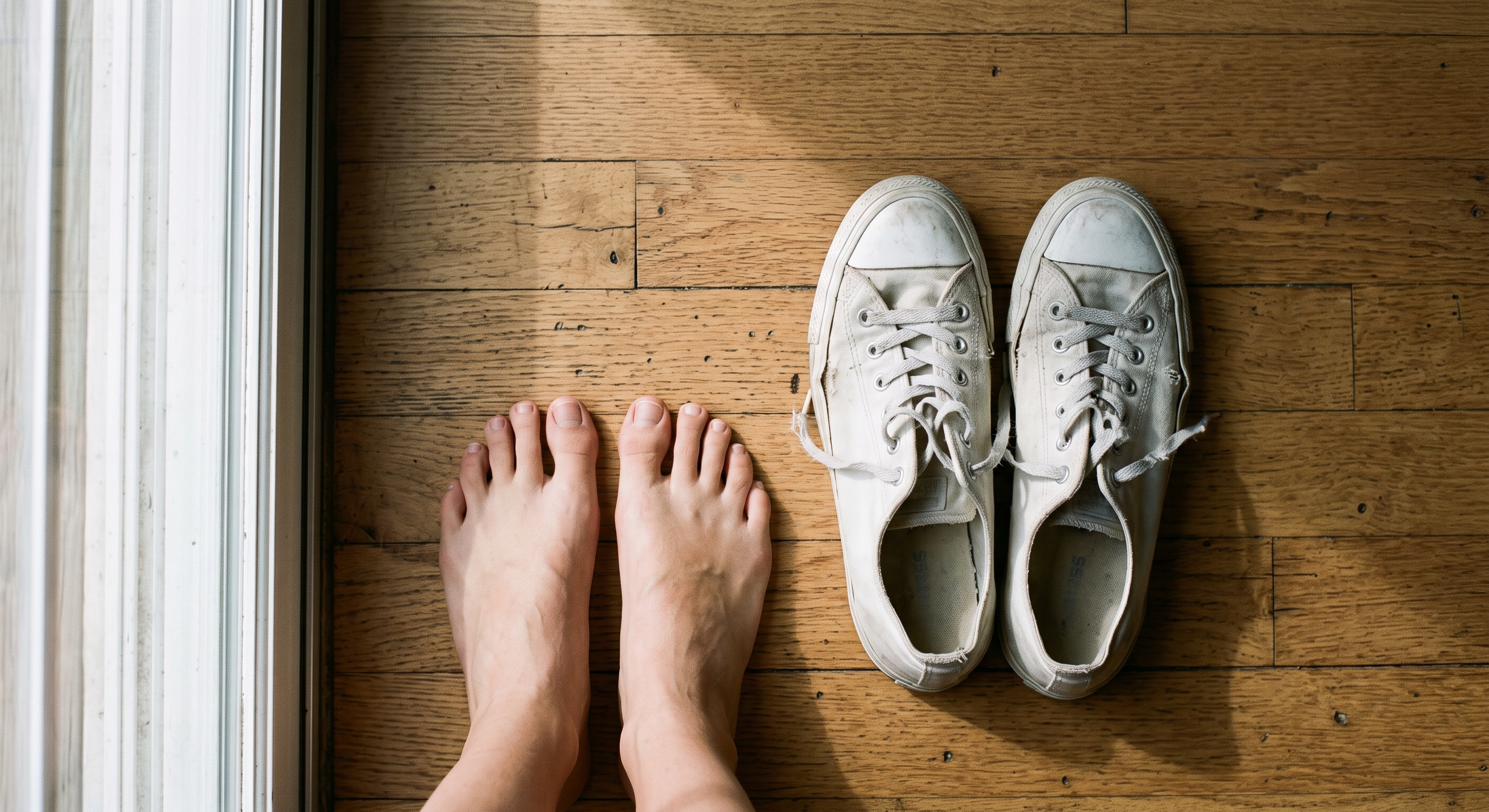
Most of us slip on our shoes before heading out the door and never give them a second thought. It just feels normal, right?
But if you zoom out and look at human history, this is actually a brand-new habit. For almost all of our evolution, people walked and ran around barefoot — no sneakers, no dress shoes, no heels. Those comfy, cushioned kicks are a modern twist.
That doesn’t make shoes the villain of this story. They keep us safe from sharp glass, scorching pavement, freezing sidewalks, and plenty of other hazards. But here’s the catch: shoes aren’t innocent bystanders either. They change how our feet develop, how they hit the ground, and how strong the small muscles inside them stay.
Scientists have compared people who go barefoot most of the time with people who wear shoes all day, every day. The differences show up in children, in adults, and even in the bones of people who lived generations ago.
So what does all of this mean for you?
This book breaks the science down in plain English. And it answers the question you’re probably already asking: if you’ve spent your whole life in shoes, is it too late for any of this to matter?
Spoiler — it isn’t.
What You’ll Get From This Book
- A clear-eyed read of what the research actually shows — and what it doesn’t
- The six specific ways conventional footwear reshapes the foot
- Why adult feet can still get stronger, with studies to back it
- A week-by-week transition plan built to keep you out of the injury zone
- A framework for choosing the right shoe for the right situation
What Scientists Actually Compared

Researchers cannot randomly assign babies to “shoes forever” or “no shoes forever” and then follow them for seventy years. That study will never exist.
Instead, they study groups that already live differently. Common examples include rural communities in India, children in parts of South Africa and Kenya, and older comparisons from China and the island of St. Helena.
These studies are usually cross-sectional. That means they take a snapshot: here are barefoot feet, here are shod feet, here is how they differ.
Snapshots cannot prove that shoes caused every difference. Activity level, terrain, nutrition, and genetics all matter too. A child running barefoot across rural Kenya is not living the same life as a child in sneakers in a suburb, and footwear is only one of the variables separating them.
Even so, the same patterns keep appearing — different countries, different decades, different age groups. That repetition is what makes the findings useful. One study is an anecdote. Fifteen studies pointing in the same direction are a signal.
How to Read the Evidence in This Book
Population comparisons (barefoot vs. shod groups) show strong, repeated associations. They are suggestive, not conclusive.
Adult training studies — people who changed their footwear and were measured before and after — are the stronger evidence. These are the ones that tell us change is possible.
Throughout this book, I’ll flag which type you’re looking at.
Six Things Shoes Do to Feet
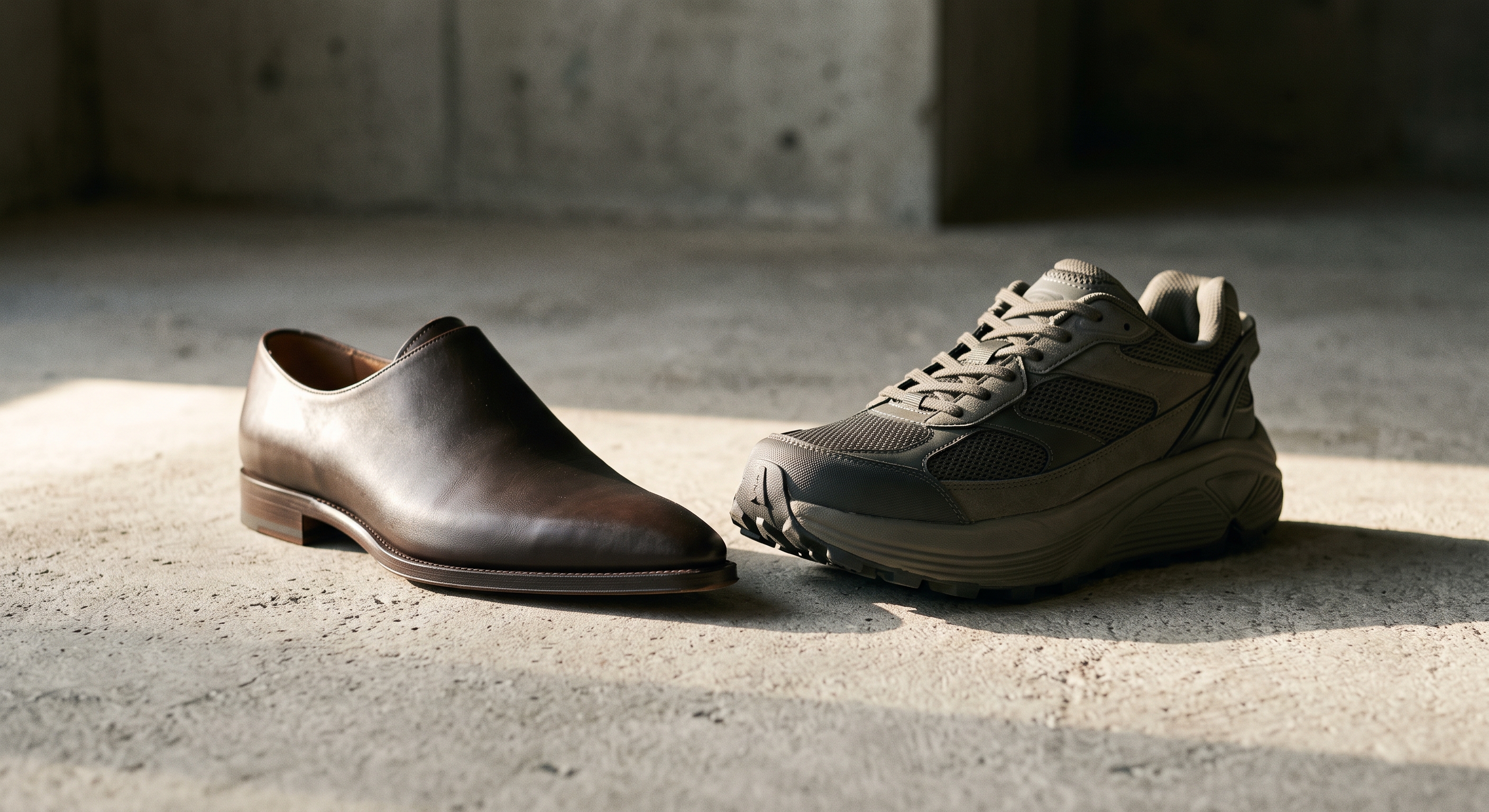
Conventional shoes do several jobs that the foot used to do for itself. Over the years, that extra help becomes a kind of cast.
1. They squeeze the front of the foot
A healthy, unloaded foot is wider at the toes than at the midfoot. Many shoes reverse that shape entirely. The result is a narrower forefoot and toes pressed together.
In a well-known comparison in Hong Kong, Lam Sim-Fook and Hodgson (1958) found hallux valgus — the bunion deformity in which the big toe angles toward the other toes — in about 2% of barefoot people and about 33% of shoe wearers.
On the island of St. Helena, Shine (1965) measured a similar split: serious big-toe deviation in about 2% of lifelong barefoot islanders, versus 16% of men and 48% of women who had worn shoes for decades.
| Population | Barefoot | Shod |
|---|---|---|
| Hong Kong — Lam Sim-Fook & Hodgson, 1958 | ~2% | ~33% |
| St. Helena, men — Shine, 1965 | ~2% | ~16% |
| St. Helena, women — Shine, 1965 | ~2% | ~48% |
Hallux valgus is not just a cosmetic issue. It can hurt, change how you push off the ground, and make finding comfortable shoes progressively harder as you age.
Global reviews now estimate the overall prevalence of hallux valgus at close to 19%, with higher rates among women and older adults — the same groups with the greatest lifetime exposure to tapered shoes.
2. They can flatten or stiffen the growing arch
Hollander and colleagues (2017) compared 810 children and teens who spent a lot of time barefoot with matched peers who usually wore shoes. After controlling for age, sex, body mass, ethnicity, and activity level, the barefoot group had higher arches and smaller hallux angles.
Other studies from India have linked early shoe-wearing to higher rates of flat feet.
The arch is not supposed to be a frozen anatomical structure. It is a spring that muscles help control.
3. They weaken the small muscles of the foot
Your foot contains more than twenty small muscles. They stiffen the arch when you need a rigid lever and let it yield when you need a shock absorber.
Shoes with arch supports, thick midsoles, and tight toe boxes reduce the work those muscles have to do. Over time, they get smaller and weaker — the same way an arm in a sling loses strength.
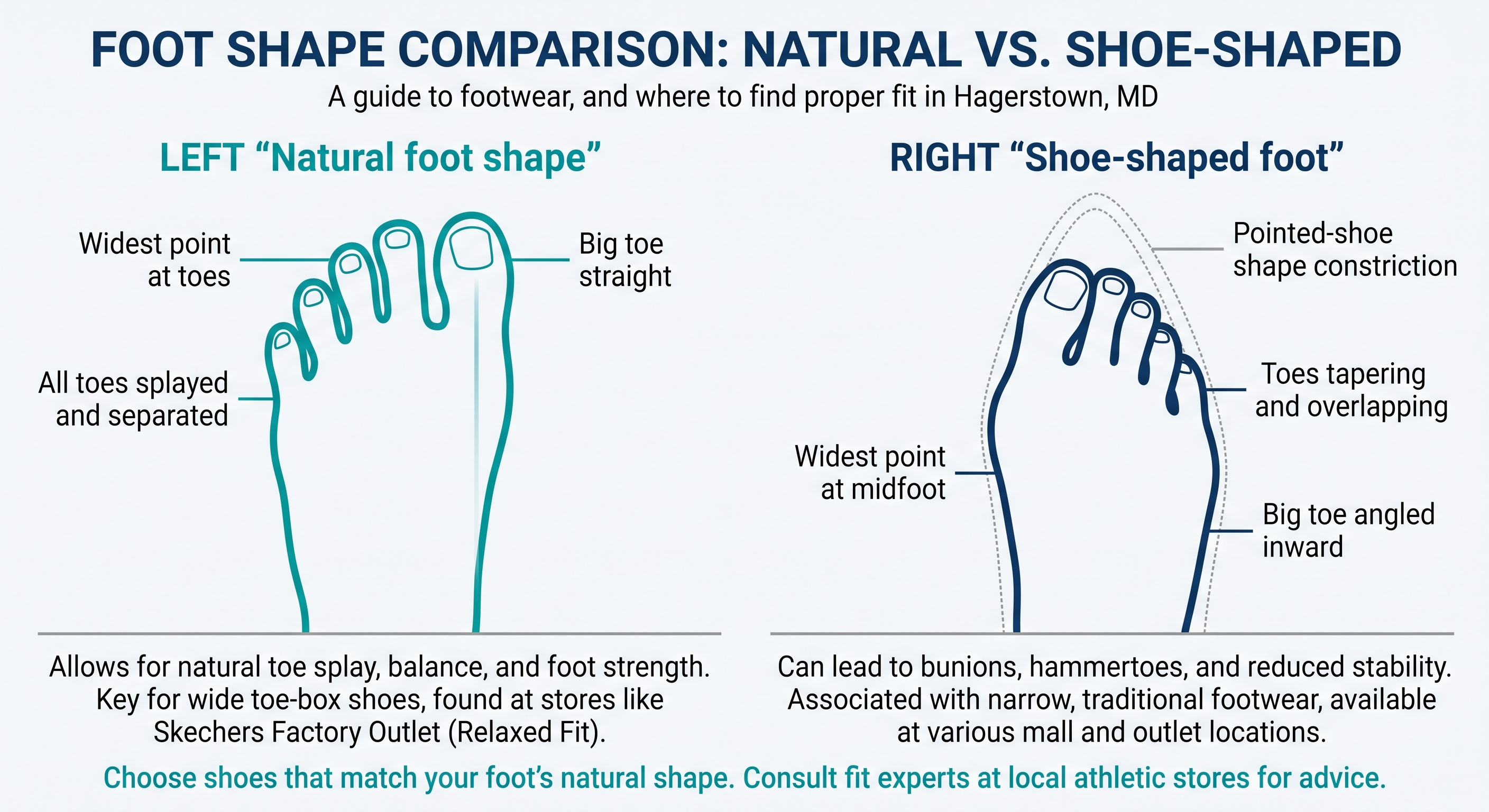
Weaker foot muscles are linked to less stable arches and to a foot that depends more on the shoe than on its own structure.
That’s one reason people feel “unsupported” the first time they take their shoes off. The support was never only in the foam. Part of it used to be in the muscle.
4. They change how force is applied to the body
Cushioned, raised heels make it easier to land on the back of the foot and take longer strides. That’s comfortable in the short term. It also creates a sharp impact peak that the shoe must absorb.
People who grow up barefoot tend to land more toward the midfoot or forefoot when they run — especially at faster speeds — and spread pressure more evenly across the sole.
A study of habitually barefoot walkers in India (D’Août et al., 2009) found wider feet and more uniform plantar pressure. Western shod feet were shorter relative to height, more slender, and showed hotter spots of pressure under the heel, the ball of the foot, and the big toe.
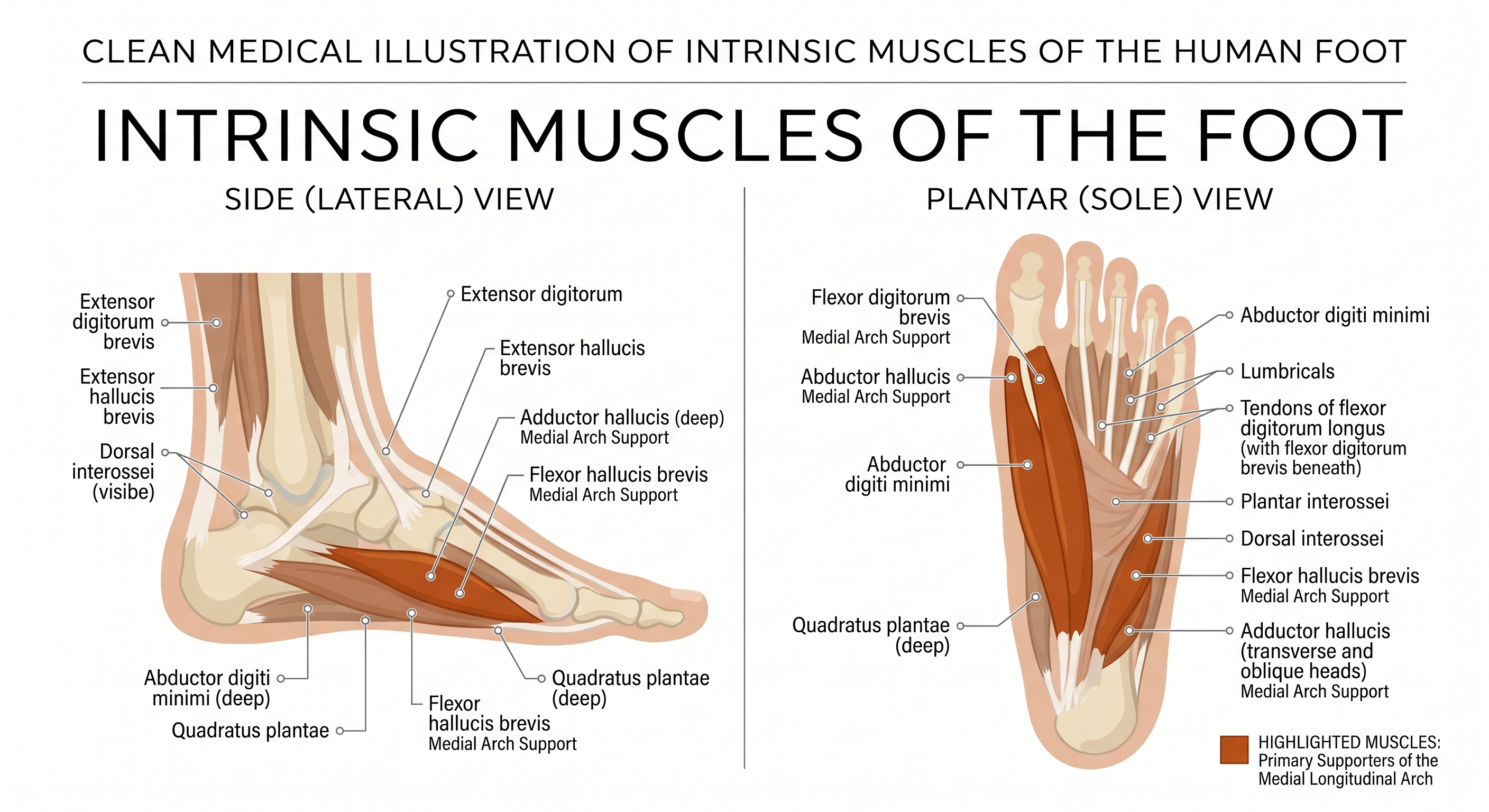
High-pressure spots matter because they are exactly where calluses, pain, and joint wear tend to show up later.
5. They create a warm, damp box
A closed shoe traps heat and moisture. That environment helps fungi and bacteria thrive. Ingrown toenails, athlete’s foot, and several skin problems are far more common in shod feet than in feet that spend most of the day in open air.
Shoes also hide early warning signs. If you never feel the ground, you’re slower to notice a hot spot, a pebble, or a subtle change in your gait.
6. They train a less skilled foot
The sole is packed with sensors. They tell your brain about texture, slope, and pressure. Shoes mute that signal.
Balance and foot placement then rely more on your eyes and less on your feet. That’s not a crisis for a healthy twenty-year-old on a flat sidewalk. It matters a great deal more for older adults at risk of falling or for anyone moving across uneven ground.
Study Snapshot
A 2017 systematic review in Medicine & Science in Sports & Exercise pooled data from 15 studies involving 8,399 people.
Findings: Habitually barefoot groups had wider feet and a smaller hallux angle. Overall injury rates did not differ significantly once mileage was accounted for — but the pattern of problems did. Barefoot groups had fewer structural deformities and more cuts and skin issues.
The authors called the long-term evidence “limited.”
That honesty matters. Shoes are not the only cause of foot trouble, and going barefoot is not a magic shield against injury.
The Benefits of Walking Barefoot
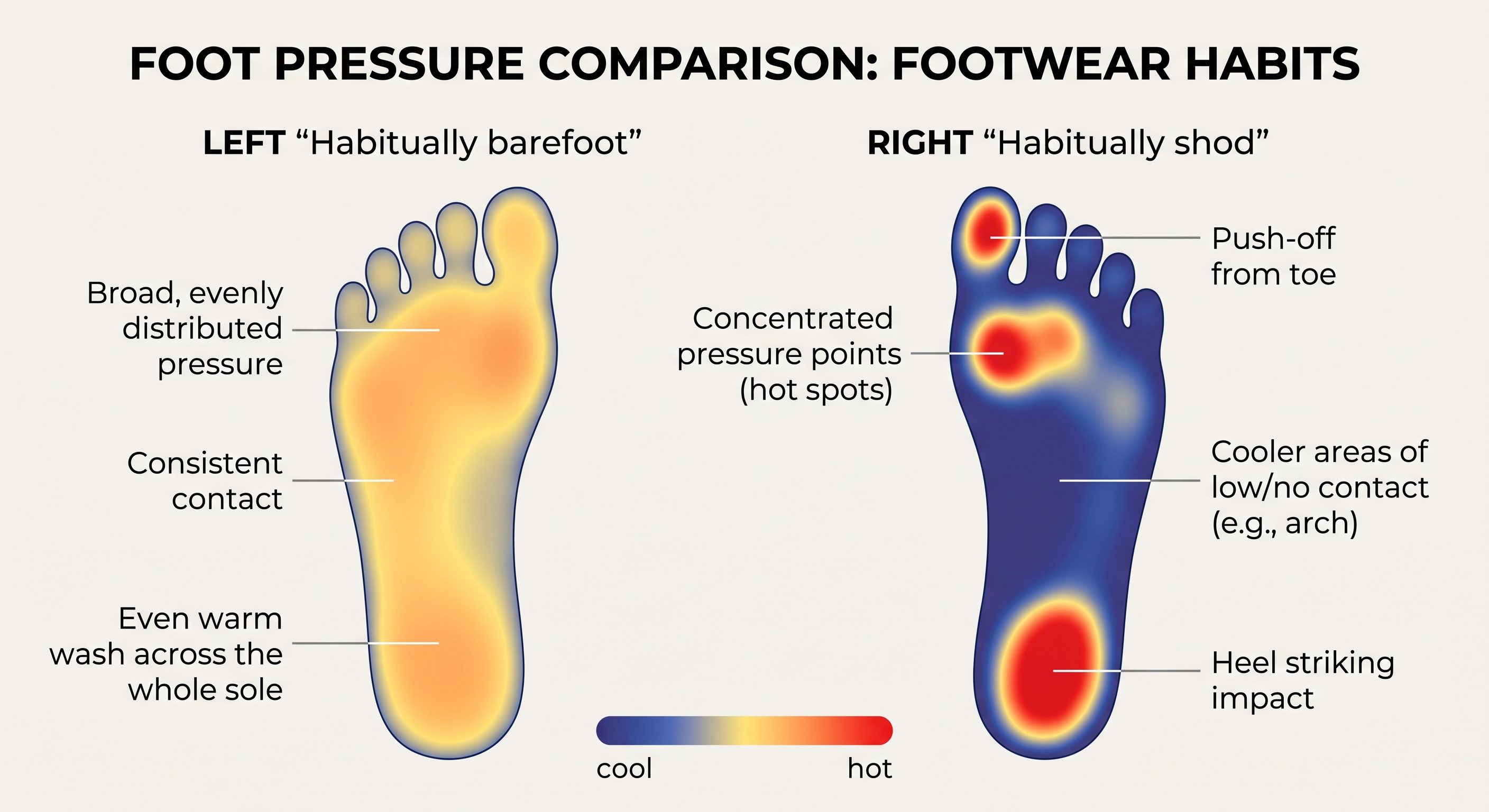
The other side of the research is more encouraging than a list of shoe problems.
Barefoot walking isn’t a wellness trend invented on social media. It’s the condition the human foot was built for — and several measurable benefits show up when people actually use their feet that way.
Stronger, more capable feet
Without a stiff sole and arch support, the intrinsic muscles have to work. That work builds capacity the same way lifting builds an arm.
A wider, more natural foot shape
Toes can spread under load. That wider base helps balance and lets the big toe push off in a straighter line.
More even pressure
Instead of dumping force onto a few small spots, the whole sole shares the job. That’s easier on the skin and joints over a long day of walking.
Better sensory feedback
Feeling the ground helps you adjust step by step. People often describe this as feeling “more planted” — which matches what we know about proprioception, the body’s sense of where it is in space.
A more economical gait for some tasks
Barefoot walking usually means a slightly shorter stride and a quicker cadence. In running studies, a midfoot or forefoot landing can reduce the sudden impact spike that cushioned-heel shoes encourage (Lieberman et al., 2010, Nature).
Fewer of the classic shoe deformities
Bunions, crowded toes, and some types of symptomatic flat feet are less common in populations that grow up barefoot.
One Striking Number
A Kenyan study of highly active children found dramatically lower reported lower-limb injury rates in the habitually barefoot group compared with matched shod peers — 8% versus 61%.
The caveat: those children also moved more throughout the day, so activity is part of the story, and the two can’t be fully separated.
The takeaway, anyway: the combination of strong feet plus high daily movement is exactly what human bodies have handled for most of history.
Good News If You’ve Worn Shoes Your Whole Life
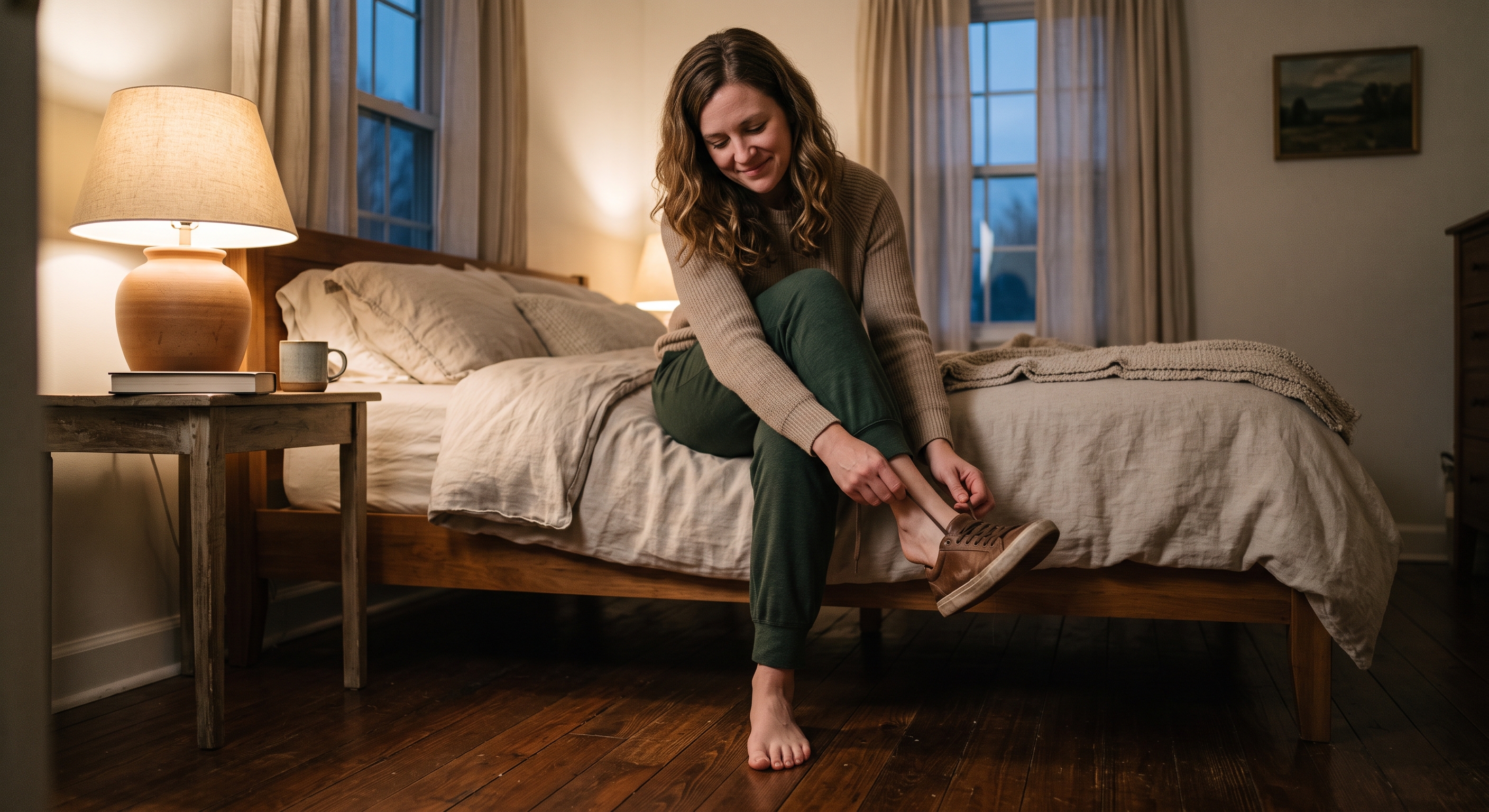
A reasonable reaction at this point is: “Cool. I grew up in sneakers. My feet are already the shoe-shaped version. Too late.”
That’s the most important correction in the newer research. Adult feet can still adapt.
Daily life in less-supportive shoes rebuilds strength
Curtis and colleagues (2021) asked Western adults to wear minimal footwear during ordinary daily activities for six months.
Average increase in toe-flexion strength after six months of daily minimal footwear.
Curtis et al., 2021 — Scientific Reports
A comparison group that had already been using minimal shoes for roughly two and a half years was just as strong — no stronger. In other words, six months of regular use got people most of the way there.
They did not have to become barefoot runners. They did not need an hour-a-day gym program. They needed the foot to start functioning again so they could walk normally.
Walking works about as well as formal foot exercises
Ridge and colleagues (2019) randomly assigned runners to one of three groups:
- Walk in minimalist shoes
- Do a foot-strengthening routine
- Keep doing what they were already doing
After eight weeks, muscle size and strength increased in both the walking and exercise groups. The control group did not change.
The practical lesson is simple: changing what you wear for daily steps can be as effective as a set of physical-therapy drills — and people are far more likely to stick with it.
The arch becomes more active, not just more “supported”
When the small muscles get stronger, the arch doesn’t always look dramatically higher in a photograph. What changes is how the arch behaves when you walk. It can stiffen when you push off and yield when you land.
That’s function, not the fashion of having a high arch.
Some adult studies of minimalist training also find larger abductor hallucis muscles — the muscle that helps control the big toe and the inner arch.
You can improve the signal going to your brain
Even a short period of walking without thick soles increases the information coming from the skin of the foot. That extra information is useful for balance.
It’s one reason physical therapists sometimes use short barefoot drills with older adults and with athletes recovering from ankle injuries.
You don’t need to go fully barefoot to get some of that effect. You need regular, safe exposure.
What “Minimal Footwear” Actually Means
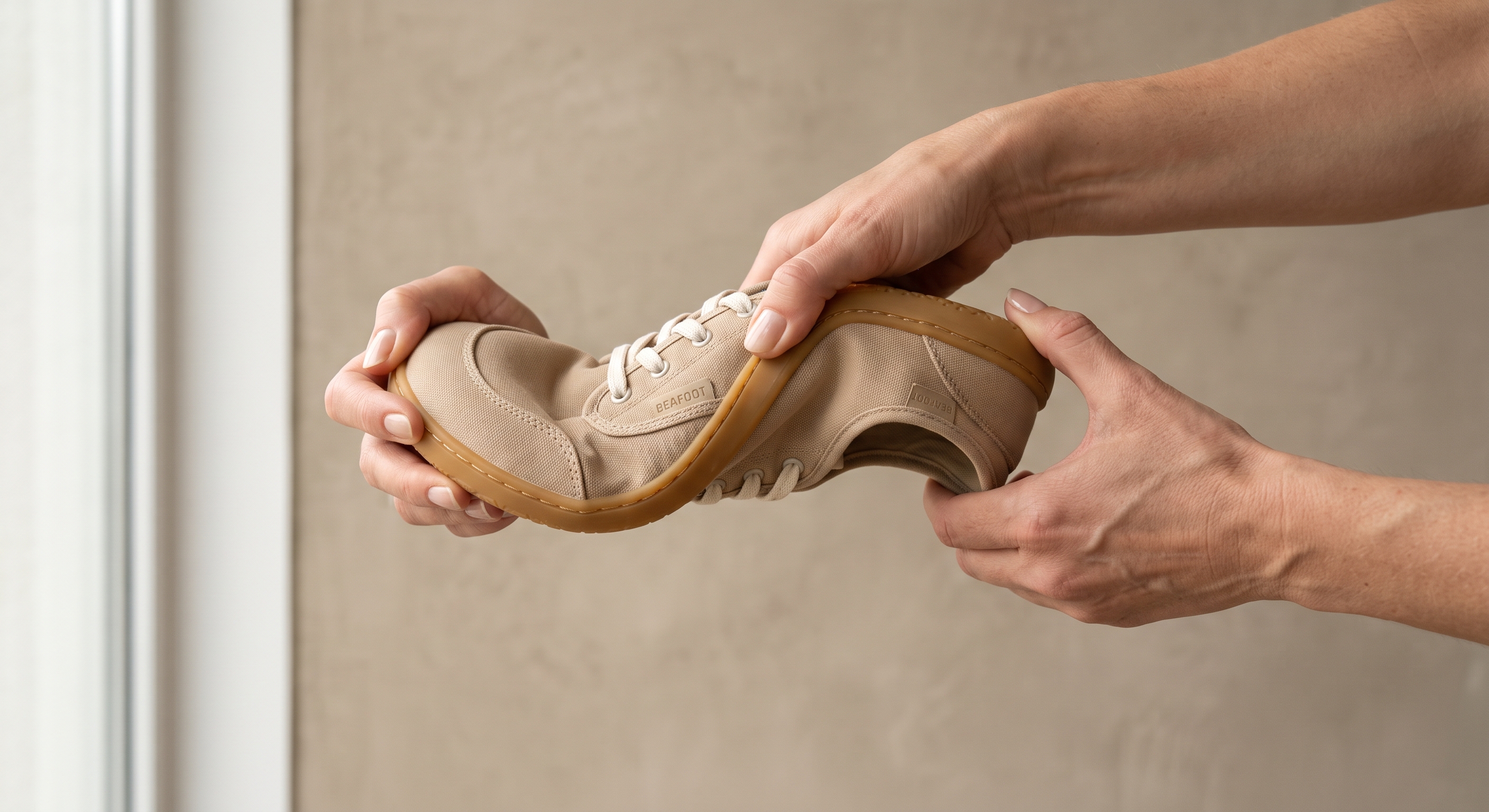
Researchers define minimalist shoes as footwear that interferes as little as possible with natural foot motion.
| Feature | What to look for |
|---|---|
| Flexibility | The sole should twist and bend easily in your hands |
| Stack height | Low to the ground — thin sole |
| Heel drop | Little or none (0–4 mm) |
| Weight | Lightweight |
| Motion control | None — no stability posts, no rigid arch support |
| Toe box | Wide, so toes can spread under load |
That last one matters as much as any of the others. A thin, flexible shoe with a pointed toe box is still squeezing your foot.
These shoes are a halfway point. They give the foot work to do while still protecting it from glass and hot pavement.
The Catch: Going Too Fast Backfires
Here’s the part most internet posts skip.
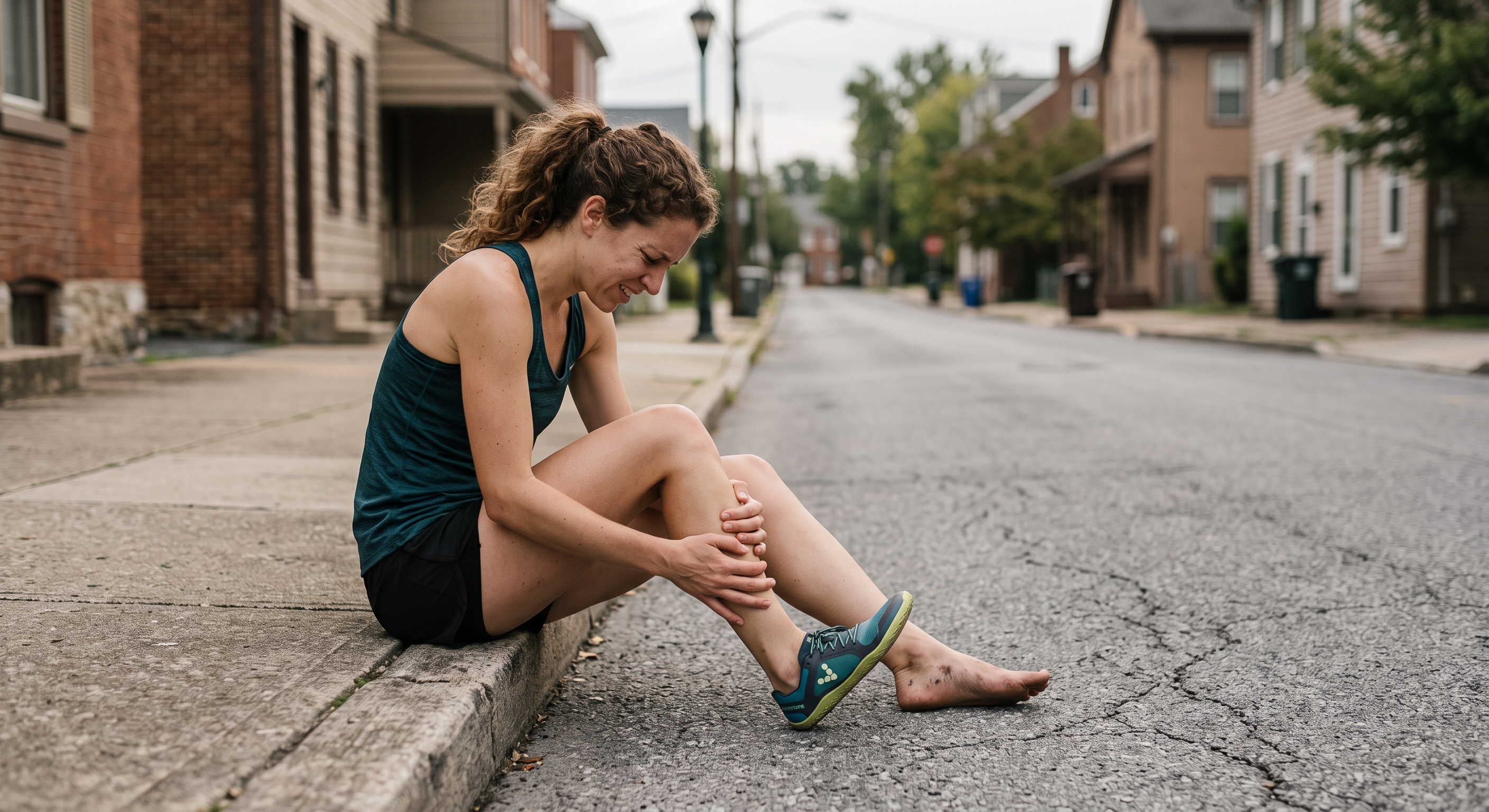
A foot conditioned by structured shoes is deconditioned. If you suddenly run five miles barefoot or in a razor-thin shoe, the muscles may complain first — but the tendons and bones are slower to adapt.
That mismatch produces the classic transition injuries:
- Sore calves
- Achilles pain
- Plantar fascia irritation
- In the worst cases, stress reactions in the metatarsals, the long bones of the forefoot
One small prospective study found injuries in 12 of 14 runners who switched to five-toed minimalist shoes using only generic guidelines.
Faster transitions show more bone marrow edema under the ball of the foot. Heavier runners appear to be at higher risk, according to some military data.
⚠ Stop Signs
Treat these as reasons to back off, not as badges of honor:
- Sharp pain, as opposed to general muscle soreness
- Swelling
- A hot spot that’s still there the next morning
- Pain that’s worse at the start of a walk rather than better
- Any pinpoint tenderness on a bone in the forefoot
Your Transition Plan, Week by Week
A careful transition looks boring on purpose. That’s the point.
Reviews of transition programs suggest thinking in terms of 8 to 16 weeks for walking, and several months if you want to eventually run substantial mileage in very minimal shoes. That timeline matches how muscle, tendon, and bone actually remodel.
The Five Rules
- Start with daily walking, not running.
- Add time in minutes per week, not all at once.
- Keep most workouts in your old shoes for the first month or two.
- Do simple footwork: short-foot holds, toe lifts, calf raises.
- Treat sharp pain, swelling, or an overnight hot spot as a stop sign.
A Sample 16-Week On-Ramp
| Phase | Weeks | Daily minimal / barefoot time | Training |
|---|---|---|---|
| 1 — Exposure | 1–4 | Barefoot at home only. 15–30 min/day. | Short-foot holds, 2× daily |
| 2 — Walking | 5–8 | Add 10–20 min/day of minimal-shoe walking. Increase ~10%/week. | Add toe lifts + calf raises |
| 3 — Volume | 9–12 | Minimal shoes for most casual walking. Old shoes for workouts. | Continue footwork 3×/week |
| 4 — Integration | 13–16 | Minimal shoes as your default daily shoes. | Optional: begin short, easy runs |
If you want to run in minimal shoes, don’t start before Week 13 — and begin with something absurdly short. Half a mile, once or twice a week, layered on top of your normal running in normal shoes.
The Four Foot Exercises
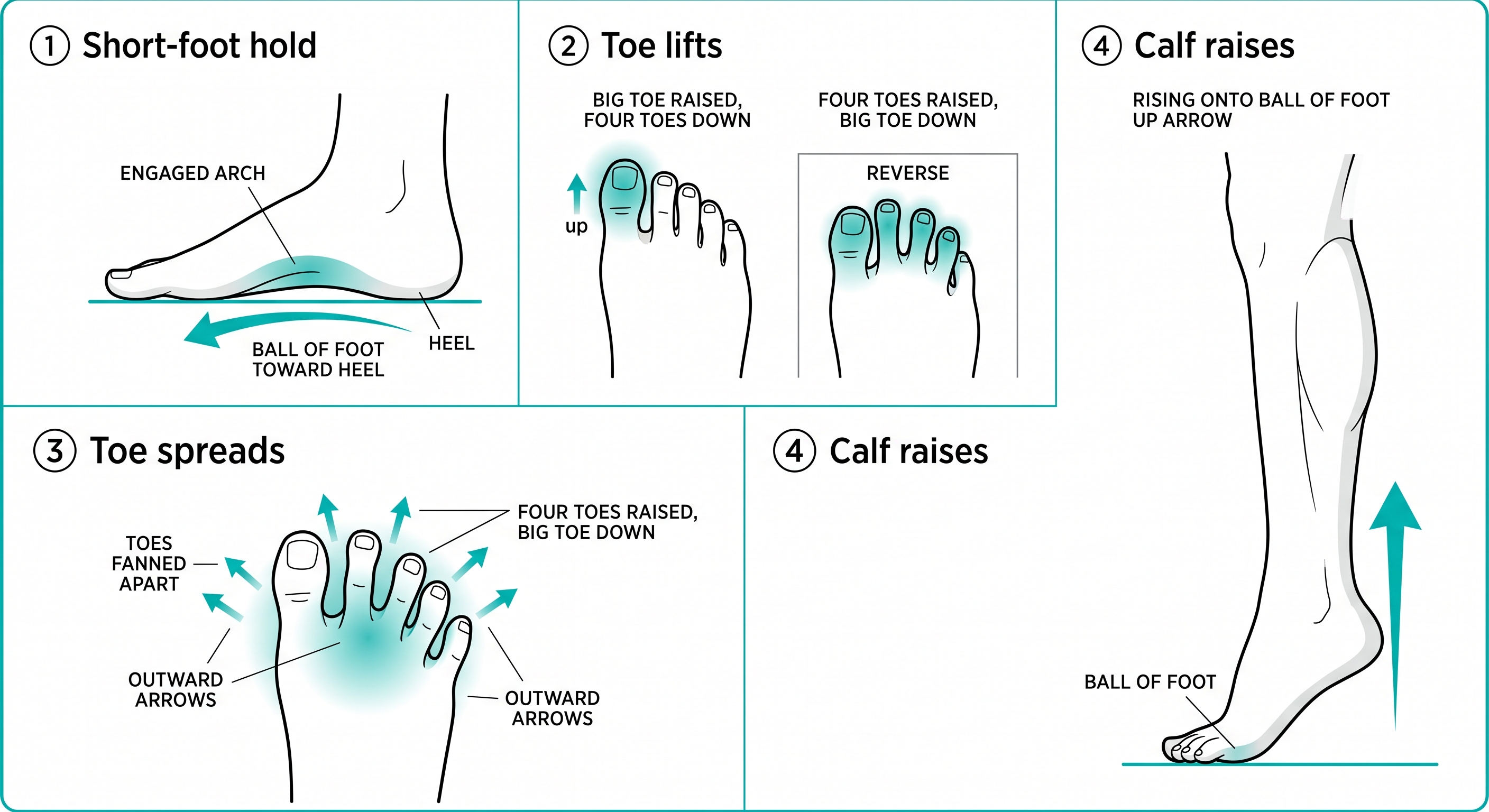
Short-Foot Hold
Sitting or standing, keep your toes flat and long, and draw the ball of your foot slightly toward your heel to raise the arch — without curling the toes.
Hold 5–10 seconds · 10 reps per foot
Toe Lifts
Standing flat. Lift only the big toe while the other four stay down. Then reverse: lift the four, keep the big toe down.
10 reps each direction
Toe Spreads
Spread all five toes apart, hold, then relax.
Hold 3 seconds · 15 reps
Calf Raises
Slow up (2 seconds), slow down (3 seconds). These matter because the Achilles takes on more load in a low-drop shoe.
2 sets of 15
Shoes Still Have a Job
None of this is an argument that you should take a final exam barefoot or walk through a construction site in sandals.
Shoes are tools. The problem is using a single tool for every surface and at every hour of the day.
A 2025 critical review of footwear across the life course (Willems et al., Healthcare) reached a blunt conclusion: most popular features of everyday shoes — thick cushioning, raised heels, built-in arch support — have little proof that they improve walking health in people who are already well. Some features, especially high heels, have clear downsides.
The authors suggested minimal footwear as a reasonable default, with heavier or more structured shoes used when a person actually needs them.
That’s a useful frame:
| Situation | Footwear |
|---|---|
| Dangerous or extreme environment | Protective, structured shoes |
| Ordinary daily life | Wide, flexible, low-drop shoe |
| Known-safe surfaces — clean floor, grass, track, beach, familiar trail | Fully barefoot |
What to Take Away
The scientific picture is not “barefoot people never get hurt.” And it’s not “shoes ruined civilization.” It’s more specific than that.
People who walk barefoot for most of their lives tend to have wider feet, straighter big toes, stronger small-foot muscles, and more evenly distributed pressure under the sole.
Lifelong shoe use is associated with narrower forefeet, more bunions, weaker intrinsic muscles, and a foot that leans on the shoe rather than on its own architecture.
Those patterns show up in children as well as adults.
If you’ve worn shoes for eighteen or twenty years already, you are not stuck with the current version of your feet. Walking more often barefoot or in truly roomy, flexible shoes can increase foot strength within months. The benefit is available to late starters.
The cost of grabbing that benefit too quickly is a real risk of injury — especially if you jump straight into running.
A Realistic Goal
- Take your shoes off at home.
- Walk the safe parts of campus or a park without them when weather allows.
- Choose daily shoes that let your toes spread.
- Give the change weeks, not a weekend.
Your feet evolved to work.
They can remember how.
Selected Studies
You don’t need to read all of these. They’re here so you can see that the claims come from real papers, not from a shoe ad.
- D’Août, K., et al. (2009). The effects of habitual footwear use: foot shape and function in native barefoot walkers. Footwear Science.
- Hollander, K., et al. (2017). Growing up (habitually) barefoot influences the development of foot and arch morphology in children and adolescents. Scientific Reports.
- Hollander, K., et al. (2017). Long-term effects of habitual barefoot running and walking: a systematic review. Medicine & Science in Sports & Exercise.
- Lieberman, D. E., et al. (2010). Foot strike patterns and collision forces in habitually barefoot versus shod runners. Nature.
- Lam Sim-Fook & Hodgson, A. R. (1958). A comparison of foot forms among the non-shoe and shoe-wearing Chinese population. Journal of Bone and Joint Surgery.
- Shine, I. B. (1965). Incidence of hallux valgus in a partially shoe-wearing community. British Medical Journal.
- Curtis, R., et al. (2021). Daily activity in minimal footwear increases foot strength. Scientific Reports.
- Ridge, S. T., et al. (2019). Walking in minimalist shoes is effective for strengthening foot muscles. Medicine & Science in Sports & Exercise.
- Warne, J. P., & Gruber, A. H. (2017). Transitioning to minimal footwear: a systematic review of methods and future clinical recommendations. Sports Medicine.
- Holowka, N. B., et al. (2018). Foot strength and stiffness are related to footwear use. Scientific Reports.
- Willems, C., et al. (2025). Footwear choice and locomotor health throughout the life course: a critical review. Healthcare.
A Note on Evidence
Most comparisons of lifelong barefoot and shod groups are observational. They show strong, repeated associations — not perfect laboratory proof that shoes alone cause every bunion.
Adult training studies provide stronger evidence that foot muscles can still grow.
Before You Change Anything
If you have a current foot injury, diabetes with numbness, or a history of stress fractures, talk with a clinician before making a big change.
About the Author

I am an accountant. business consultant, and publisher. You can see some of my writing on my blog, AviBusinessSolutions.online. Most of my articles are about businesses. However, I am a deep thinker and like to tackle other topics outside of my field. I used Grok, Koala, and Grammarly to help me bring the eBook to life. Can you follow me on LinkedIn, X/Twitter, Facebook, Instagram, and Bluesky?